
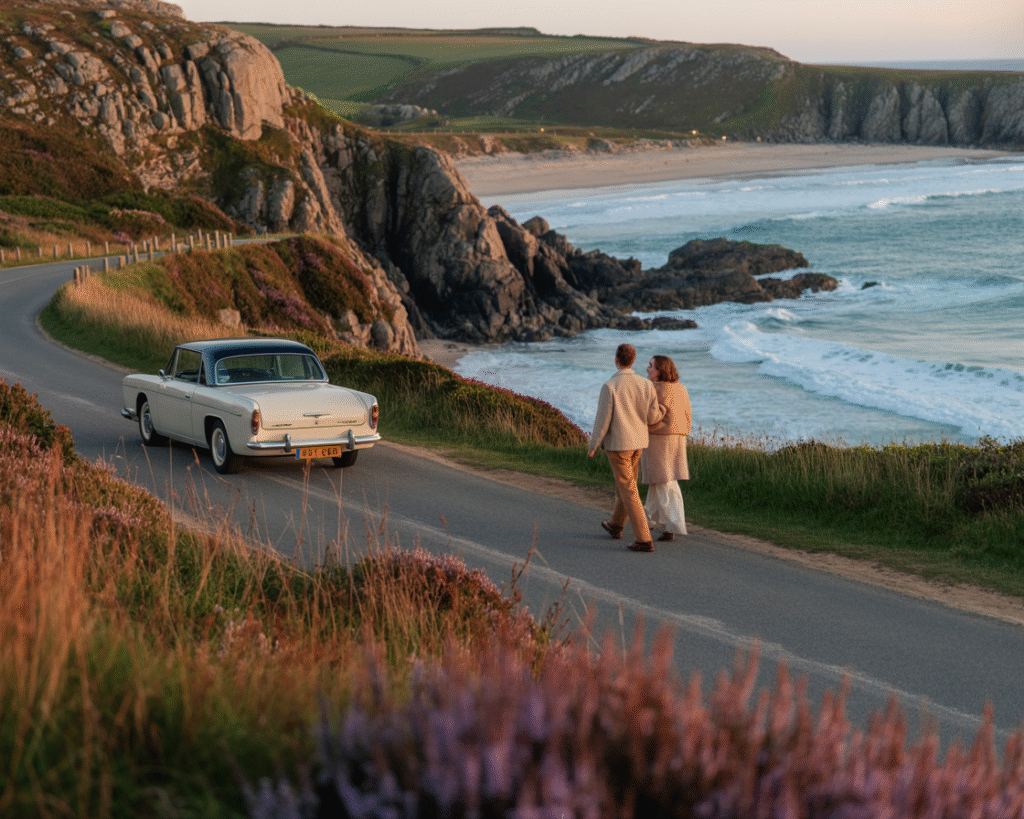
Sea cliffs that drop into turquoise coves. Golden beaches with surf that actually earns the hype. A bakery every few miles slinging warm, flaky pasties.
You don’t “visit” the Cornwall coast—you road-trip it, windows down and playlists loud. Here’s your 7-stop route for beaches, pasties, and cliffside walks that hits the best bits without the faff.
How to Tackle the Route (Without Losing Your Chill)
Think of this as a loop that starts near Newquay, swings west to Land’s End, arcs up through St Ives, then eases back toward the north coast. You can do it in 3–5 days, but 6–7 days feels breezy.
FYI, Cornwall roads are narrow and hedged, so drive small and pack patience. Best time: May–June or September for sunshine and fewer crowds. Parking reality check: Download JustPark and carry coins. Cornish machines sometimes hate cards. Surf rental: Every other beach town has a hire shop. Bring a towel poncho unless you enjoy car-seat contortionism.
Stop 1: Fistral Beach, Newquay – Surf, Sand, and a Proper Wake-Up
Kick off at Fistral Beach, Cornwall’s surf HQ.
Even if you don’t surf, watching the sets roll in with a flat white just hits different. The sand stretches wide, the energy buzzes, and you’ll find kit, coffee, and people-watching in one tidy package.
Quick Wins at Fistral
- Learn to surf: Book a lesson with a reputable school on-site. You’ll stand by lesson two—promise.
- Coastal warm-up: Walk south to Pentire Head for views over Crantock and the Gannel estuary.
- Food tip: Fish tacos and a local lager post-surf = bliss.
Stop 2: Bedruthan Steps – Giant Rocks and “Is This Real Life?” Views
Drive 20 minutes north to Bedruthan Steps, where sea stacks jut from the sand like a fantasy set.
The cliff path gives you all the drama with none of the danger if you stick to it like a responsible adult. The tides here rule everything, so check them before you even think about heading beachward.
How to See It Safely
- Stick to marked paths: The cliffs crumble—no hero shots on the edge.
- Golden hour: Late afternoon lights up the stacks. Bring a windproof layer.
- Parking: National Trust lot nearby; membership helps with fees all trip long (IMO, worth it).
Stop 3: St Agnes & Chapel Porth – Tin Mines and Wild Energy
Swing south to St Agnes, where Cornwall’s mining heritage meets raw Atlantic power.
The cliff walk to Wheal Coates puts you eye-level with an old engine house that basically invented the “moody coastal ruin” aesthetic. On a blustery day, the waves thunder and you feel tiny—in a good way.
What to Eat at Chapel Porth
- Hedgehog ice cream: Soft serve rolled in clotted cream and honey-roasted hazelnuts. Sounds chaotic; tastes elite.
- Pasties: Grab one in St Agnes village.
Traditional steak hits best after the hike.
Stop 4: St Ives – Beaches, Art, and That Silky Light
Yes, it gets busy. Yes, it’s still worth it. St Ives squeezes in beaches like Porthmeor and Porthminster, galleries like Tate St Ives and the Barbara Hepworth Museum, and seafood you’ll rave about for months. Park at the Lelant Saltings park-and-ride or a long-stay lot and walk in—your sanity will thank you.
Choose Your Beach
- Porthmeor: Surfy, west-facing, great sunsets.
- Porthminster: Sheltered, prettier-than-your-Instagram-lens turquoise water.
- Carbis Bay: Calm and family-friendly, with an easy coast path back to town.
Where to Refuel
- Seafood: Book ahead—everyone else had the same idea.
- Bakery crawl: Grab a proper Cornish pasty and a saffron bun.
Carb loading is a lifestyle here.
Stop 5: Land’s End, Sennen & Porthcurno – Big Views, Bigger Walks
Head west to the far edge of mainland Britain. Sennen Cove gives you a sweeping sandy bay with strong surf and a chilled vibe. Walk the coast path to Land’s End for huge cliffs and sea arches. Then drop to Porthcurno, a postcard-perfect bay with insanely clear water and the Minack Theatre carved into the cliff.
Must-Do Loop
- Park at Sennen Cove early.
- Walk to Land’s End for the classic “I made it” moment (skip the souvenir shop unless you love queues).
- Drive to Porthcurno for a beach dip.
- Catch a show at Minack, or just visit in the daytime—the view steals the scene either way.
Stop 6: The Lizard Peninsula – Kynance Cove and Hidden Coves
The Lizard offers drama without the crowds if you time it right. Kynance Cove serves up serpentine rock, teal water, and sand that appears at low tide like a magic trick.
For quieter vibes, explore Polpeor and Church Cove, then grab a pint at a friendly village pub.
Timing and Tides
- Arrive early: Kynance parking fills fast by late morning in summer.
- Low tide: That’s when the sandy coves connect—bring sturdy shoes.
- Café stop: The Kynance Cove café nails the cream tea. Jam first, then cream—Cornish rules.
Stop 7: Port Isaac & the North Coast – Harbours, Hikes, and a Last Pastie
Finish strong in Port Isaac, a fishing village stacked like a movie set (because, well, it is). Wander the tight lanes, watch boats bob, and then hit the South West Coast Path toward Port Gaverne or north to Tintagel if you’ve got legs left. The cliffs up here look wild and ancient, perfect for those last big views.
Food and Photo Ops
- Pasty stop: Aim for a local bakery—still warm if you’re lucky.
- Seafood: Book ahead for anything fancy; otherwise grab crab sandwiches and eat on the harbour wall.
- Sunset spot: The headlands north of town keep the golden light forever.
Road-Trip Logistics You’ll Actually Use
- Car size matters: Choose compact.
Cornish lanes get “two cars, one lane, zero chill.”
- Navigation: Download offline maps. Signal can drop the second a hedge looks at you funny.
- Packing list: Windproof jacket, quick-dry towel, swimsuit, comfy trainers, a spare phone charger, and a “leave sand in the car” brush.
- Driving etiquette: Use passing places, wave thanks, and don’t tailgate tractors—they run the county.
FAQ
How many days do I need for this Cornwall coast road trip?
You can sprint it in 3–4 days, but 6–7 days feels right. That gives you time for a surf lesson, a couple of long cliff walks, and at least one lazy afternoon where you do nothing but eat ice cream and stare at the sea (highly recommended, IMO).
Is driving in Cornwall scary?
It’s fine if you stay calm.
Lanes get narrow with high hedges, but passing places pop up constantly. Go slow, tuck in, and smile. Locals appreciate courtesy, and so will your side mirrors.
When’s the best time to visit for fewer crowds?
May–June and September–early October hit the sweet spot.
You’ll dodge peak summer chaos, still catch lovely weather, and snag easier parking. Winter can feel moody and magical, but storms close paths—check conditions.
Do I need to book anything in advance?
Yes for accommodations, especially St Ives and weekends. Book Minack Theatre tickets early if you want a show.
Surf lessons fill fast in summer, and some car parks allow pre-pay—handy if you like planning (or just hate machines).
What are the absolute must-pack items?
A windproof layer, comfortable walking shoes, swimsuit, microfiber towel, reusable water bottle, and sun protection. Toss in coins for parking and a power bank. FYI, a lightweight dry bag saves your phone from surprise sea spray.
Where do I find the best pasty?
Controversial topic.
Try bakeries in St Agnes, St Ives backstreets, and any village shop that sells out by lunchtime—always a good sign. Order a traditional steak first, then get fancy (cheese and onion slaps, IMO).
Wrap It Up: Your Cornwall Coast Game Plan
Hit surfy Newquay, gawk at Bedruthan’s stacks, hike St Agnes, art-hop St Ives, stride the Land’s End cliffs, dip into Kynance’s turquoise, and finish with Port Isaac’s quiet charm. Keep it flexible—Cornwall rewards detours and snack breaks.
Drive slow, walk high, swim often, and never pass a bakery without “just popping in.” Your future self will thank you.