
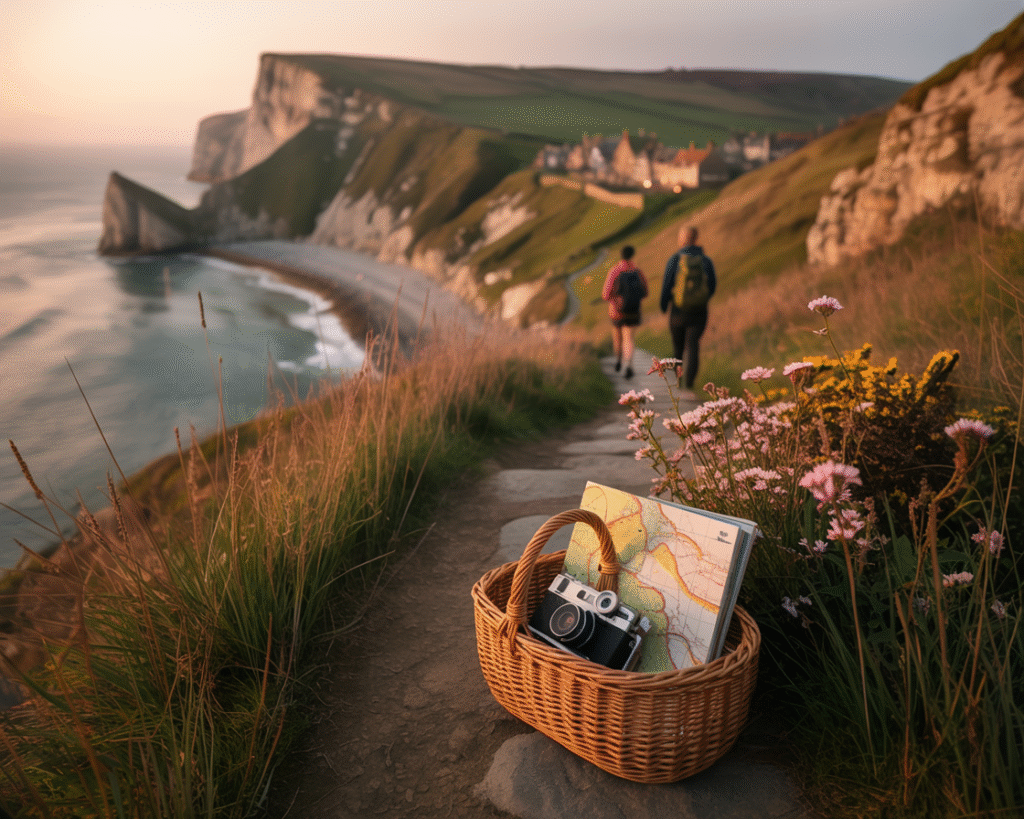
Dorset doesn’t whisper; it winks. Clifftop paths drop to turquoise coves, villages look ripped from a storybook, and beaches literally hand you fossils like party favors from the Jurassic period. If you crave big skies, bigger horizons, and a little mud on your boots, Dorset delivers.
Pack curiosity and snacks—this county rewards both.
The Jurassic Coast: Walks With Wow Factor
The Jurassic Coast stretches for 95 miles and flexes every coastal muscle. You’ll hike along chalk cliffs, peek into sea-carved arches, and watch the light flip from gold to pewter as clouds roll in. The secret sauce?
Contrast. Dorset gives you drama one minute and a postcard the next.
Top Clifftop Routes Worth Your Legs
- Lulworth Cove to Durdle Door: Short but stunner. Expect a steep climb, unreal sea blues, and the famous limestone arch that looks too perfect to be real.
- Old Harry Rocks from Studland: A breezy loop with chalk stacks that look like giant teeth.
You’ll get Isle of Wight views on a clear day.
- Golden Cap: Highest point on the south coast. You earn it with a huff-and-puff climb, then cash out with sweeping panoramas.
Pro tip: The South West Coast Path posts clear waymarks, but coastal weather changes fast. Pack layers, water, and a snack that doesn’t crumble into pocket dust.
Fossil Hunting Without the Facepalm
Let’s talk treasure.
Dorset’s beaches hide fossils from 185 million years ago, and you can find them without acting like a movie paleontologist. Walk, look, collect—simple. But do it right.
Where to Search (and What to Expect)
- Charmouth: The beginner’s playground.
Head to Charmouth Heritage Coast Centre for a tide chart and a quick tutorial. You’ll spot ammonites in the shingle and maybe a belemnite or two.
- Lyme Regis: Mary Anning’s old stomping ground. After a storm?
Jackpot. Stick to the beach; let the cliffs do their own thing (FYI, they’re crumbly).
- Kimmeridge Bay: Rock pools, ledges, and layered geology that makes every geologist grin. Less about quantity, more about quality scenery.
Etiquette 101: Leave the cliffs alone, don’t hammer rocks in situ, and never ignore tide times.
The sea will win that argument every time.
Storybook Villages That Actually Live Up to the Hype
Some English villages feel curated; Dorset’s feel lived-in and lovely. You get thatched roofs, roses that refuse to behave, and pubs that understand the assignment: good ale, better pies.
Villages to Wander (and Linger)
- Corfe Castle: A medieval ruin perched on a hill and a village snuggled at its feet. Climb the ruins, then reward yourself with a bakery stop.
- Shaftesbury: Notched on a hilltop with Gold Hill—that famously steep cobbled street from old TV ads.
Views that slap, in the best way.
- Abbotsbury: Swannery, subtropical gardens, and a ridgeway walk that lights up the coast. It feels like a quiet secret.
IMO, Dorset villages nail the balance: quaint but not twee, friendly but not in-your-face. Bring a camera and patience for narrow lanes.
Beach Days: Pebbles, Sand, and “Did You See That?”
Dorset packs an A-list of beaches, each with its own vibe.
You want soft sand? Done. You want epic geology?
Also done. You want wind in your hair and chips in a paper cone? Always.
- Studland Bay: Four miles of sand and gentle waves.
Great for swims, paddleboards, and lazy afternoons.
- Weymouth: Classic seaside with a wide sandy arc and a harbor that hums in the evening.
- West Bay: Golden cliffs + broad shingle. The cliffs here look like someone sliced cake with a geological knife. Respect the edges.
- Ringstead Bay: Quieter, calmer, fewer crowds.
Park a bit out and earn your dip.
Heads up: Shingle beaches make flip-flops cry. Bring sturdy sandals. And always eye those tide times.
Yes, again.
Food, Pubs, and “I Deserve This” Treats
After a long walk, you want carbs and something cold. Dorset gets it. Fresh seafood, farmhouse cheeses, local cider—this is your reward cycle.
What to Eat Where
- Lyme Regis: Grab fish and chips on the Cobb and watch the boats wobble in.
Bonus points for eating on the seawall.
- Bridport & West Bay: Casual seafood huts, great market days, and social buzz. Easygoing and tasty.
- Rural pubs: Roast lunches, sticky toffee pudding, and local ales. If the menu mentions crab or Portland lamb, say yes.
FYI: Dorset makes excellent ice cream and cider.
Both are essential hydration, obviously.
Easy Logistics: Getting Around Without Losing the Plot
Dorset sprawls, but you can navigate it without stress. Mix car, bus, and boots for best results.
- Driving: Scenic but narrow lanes. Take it slow and pull over for tractors with dignity.
- Public transport: Jurassic Coaster buses connect coastal hubs.
Sit upstairs for the views and a tiny adrenaline rush near cliff edges.
- Parking: Coastal car parks fill early in summer. Arrive pre-10 a.m. or aim for late afternoon golden hour.
- Seasonal timing: Spring and September offer the sweet spot—fewer crowds, kinder weather, happier you.
Short Itineraries That Actually Work
Sometimes you want a blueprint you can tweak. Here are fast plans that hit the highlights.
One-Day “Greatest Hits”
- Morning: Hike Lulworth Cove to Durdle Door.
- Lunch: Picnic on the beach or café stop in West Lulworth.
- Afternoon: Drive to Corfe Castle and wander the ruins and village.
- Evening: Sunset at Old Harry Rocks lookout and dinner in Swanage.
Weekend Sampler
- Day 1: Fossil hunt at Charmouth, lunch in Lyme Regis, ice cream on the Cobb, and sunset at Golden Cap.
- Day 2: Studland Beach morning swim, Corfe Castle, and a lazy pub lunch.
Finish with a coastal stroll near Kimmeridge.
FAQs
When’s the best time to visit Dorset?
Late spring (May–June) and early autumn (September) offer warm days, fewer crowds, and clear views. Summer buzzes with energy, but car parks fill fast. Winter brings wild seas and empty paths—moody in the best way, just bring layers.
Do I need special gear for fossil hunting?
Nope.
You need sturdy shoes, a small bag for finds, and patience. Leave hammers at home and never dig into cliffs. Check tide times and go after storms for better beach-scattered fossils.
Is Dorset good for kids?
Absolutely.
Safe beaches, short scenic walks, rock pools, and dinosaur lore keep kids engaged. Add ice cream and a castle, and you’ve basically won the day.
Can I do Dorset without a car?
Yes, with some planning. Base yourself in hubs like Weymouth, Swanage, or Lyme Regis and use buses like the Jurassic Coaster.
Choose loop walks and beaches within walking distance to keep it streamlined.
Are the coastal paths difficult?
They vary. Some routes roll gently; others punch with steep climbs. Wear decent shoes, bring water, and pick distances that match your energy.
You can always bail to the nearest pub—no shame.
What should I pack?
Layers, waterproof jacket, sun protection, reusable water bottle, snacks, and a charged phone with offline maps. Toss in a lightweight towel if the sea looks irresistible. IMO, trekking poles help on steeper sections.
Wrap-Up: Dorset, Booked
Dorset mixes clifftop drama, fossil-flecked beaches, and villages that feel like a warm hug.
You can hike hard, linger in tearooms, or stare at waves until your thoughts unclench. That’s the magic here: space to breathe, explore, and snack between views. Go soon, walk far, and let the coastline do its thing.