
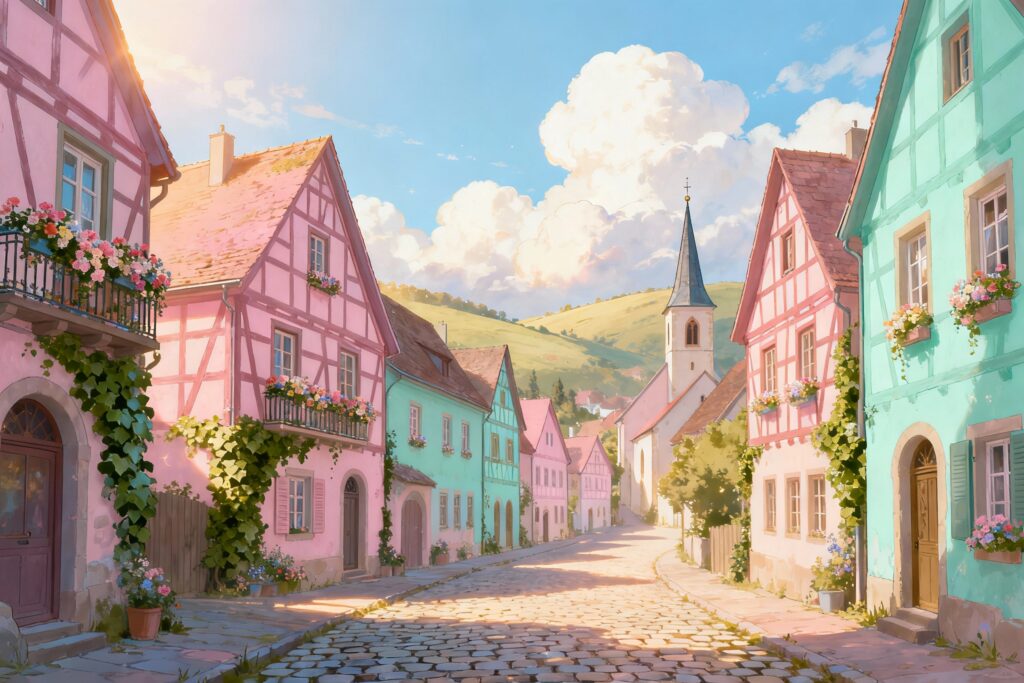
You want half-timbered houses, cobblestoned lanes, and the feeling that a tiny gnome might hand you a pretzel? Germany’s fairy-tale towns deliver. They’re charming, walkable, super photogenic, and absolutely stuffed with history.
If you love storybook vibes—minus the dragons—this first-timer’s guide will help you pick the best villages, plan smarter, and avoid the tourist traps.
Why Germany Does Fairy-Tale So Well
You’ve got the Brothers Grimm, medieval trade routes, and regions that kept their architectural soul through the centuries. That combo creates a greatest-hits album of timbered houses, steep slate roofs, and gates straight out of a fantasy novel. The best part?
Many towns sit close together, so you can hop between them without a five-hour odyssey. Quick vibe check:
- Bavaria: Alpine backdrops, painted facades, dirndls, and beer halls.
- Franconia: Half-timbered perfection, wine culture, and mellow crowds.
- Rhine & Moselle: River castles, vineyards, and cruise-friendly villages.
- Harz Mountains: Witchy folklore, dark woods, and colorful towns.
Essential Fairy-Tale Towns To Put On Your Map
Rothenburg ob der Tauber (Bavaria)
The poster child. The walls, towers, and lanes feel cinematic because, well, filmmakers love it. Arrive early or stay overnight to watch the day-trippers evaporate and the town glow at blue hour. Don’t miss:
- Walk the town walls for those roofline views.
- Plönlein corner—yes, that Instagram one.
Go at sunrise.
- Käthe Wohlfahrt for Christmas vibes year-round.
Bacharach (Rhine Valley)
Wine, timbered facades, and a castle watching from above. It’s romantic without trying too hard. Use it as a base to cruise the Middle Rhine past cliff-clinging castles. Don’t miss:
- Stahleck Castle—now a hostel with killer views.
- Local Riesling tastings; dry or off-dry, your call.
- Sunset along the old town wall path.
Quedlinburg (Harz)
Thousands of half-timbered buildings stacked like a storybook city, plus a UNESCO badge.
Cobblestones everywhere, so wear shoes with grip, not fashion regret. Don’t miss:
- Collegiate Church and castle hill for panoramas.
- Münzenberg quarter for the prettiest lanes.
- Harz steam train day trip if you love retro locomotives.
Mittenwald (Bavarian Alps)
Painted facades (Lüftlmalerei), violins, and mountain air you can bottle. It feels like you stumbled into a postcard and someone handed you a hiking pole. Don’t miss:
- Leutasch Gorge walk—wooden paths above turquoise water.
- Violin-making museum: tiny but fascinating.
- Cable car to Karwendel for big views and small effort.
Meersburg (Lake Constance)
Terraced lanes spilling toward a glittering lake, plus one of Germany’s oldest inhabited castles. It’s a mini-vacation with a Mediterranean vibe. Don’t miss:
- Old Castle tour for creaky floors and history nerdery.
- Waterfront promenade at sunset.
- Ferry hop to Mainau Island’s gardens, FYI they’re spectacular in spring.
Monschau (Eifel)
Tucked in a river valley with slate-roofed houses and ridiculously cute bridges.
It’s close enough to Belgium for waffle cravings to make sense. Don’t miss:
- Red House museum for 18th-century interiors.
- Eifel National Park trails right outside town.
- Christmas Market if you like cozy chaos.
Plan Like A Pro: Routes That Make Sense
You can string several fairy-tale towns into easy loops. Here are two tried-and-true itineraries that won’t have you living in transit.
Southern Charmer (4–6 days)
- Munich → Mittenwald (Alps and frescoed facades).
- Garmisch or Oberammergau optional detour.
- Drive the Romantic Road: Füssen → Landsberg → Dinkelsbühl → Rothenburg ob der Tauber.
- Finish in Würzburg for the Residenz and Franconian wine.
Castles & Rivers (3–5 days)
- Frankfurt → Bacharach base on the Rhine.
- Day trip by boat or train to St. Goar, Oberwesel, or Boppard.
- Hop to Cochem on the Moselle for a turreted castle fix.
IMO: If you hate packing/unpacking, pick one base and day trip by train or boat.
Slower = better.
When To Go (And When To Nope)
Spring (April–May): Flowers, fewer crowds, jackets still needed. Great for hikers. Summer (June–August): Long days, festivals, peak crowds. Book early and aim for mornings/evenings. Fall (September–October): Golden vineyards along the Rhine/Moselle = chef’s kiss.
Cozy temps, harvest events. Winter (late Nov–Dec): Christmas markets transform towns into fairy-light heaven. Short days, big magic. January can feel sleepy but peaceful. Avoid: midday in July/August in Rothenburg or Cochem unless you enjoy tour bus karaoke.
How To Travel Smart (Without Overthinking It)
Getting Around
- Train: Reliable and scenic.
Regional day passes save cash for couples/families.
- Car: Flexible for small villages. Watch for narrow lanes, limited old-town parking, and environmental stickers (Umweltplakette) in some cities.
- Boat: Rhine/Moselle cruises are basically moving viewpoints. Sit top deck, camera ready.
Where To Sleep
- Within the walls: Magical nights, empty early mornings.
Pricier but worth it in Rothenburg and Quedlinburg.
- Nearby towns: Cheaper, quieter, quick train in. Great for Bacharach/Cochem combos.
- Castle hostels: Budget-friendly bragging rights. Book months in advance.
What To Eat (Besides Pretzels)
- Franconian Schäufele (pork shoulder) with dumplings in Rothenburg/Würzburg.
- Spätzle everywhere; add cheese for instant happiness.
- Rhine/Moselle Riesling, from bone-dry (trocken) to dessert-sweet (Auslese).
- Harz Brockwurst and regional cheeses in market halls.
- Lake Constance local fish and apple everything.
FYI: Many kitchens break between lunch and dinner.
Aim for 12:00–14:00 and 18:00–21:00 to avoid hangry wandering.
Photo Tips Without Being That Tourist
- Go early or late: Soft light and empty streets fix 90% of issues.
- Look up: Painted gables and carved beams hide at second-story level.
- Use reflections: Puddles, river surfaces, and shiny cobbles = instant drama.
- Respect privacy: People live here. Ask before photographing courtyards or residents.
- Put the phone down: Take one “wow” shot, then actually enjoy the place.
Quick Etiquette & Practical Stuff
- Cash: Cards work more than before, but some small bakeries and guesthouses still love cash.
- Sundays: Many shops close. Cafés and restaurants usually open.
- Language: Basic German greetings go far.
A smile and “Guten Tag” beats pointing wildly.
- Pack: Layers, waterproof jacket, comfy shoes with grip. Cobblestones will humble you.
- Safety: Extremely safe. Watch for bikes more than pickpockets.
FAQ
Can I visit these towns without renting a car?
Yes.
Trains and regional buses connect most towns well, especially along the Rhine/Moselle and the Romantic Road hubs. You might add a short taxi or local bus for smaller spots, but you can absolutely do a car-free trip.
How many towns should I try to see in one week?
Pick 3–4 bases and add day trips. Example: Rothenburg (2 nights), Würzburg (1), Bacharach (2), and Cochem (2).
You’ll see plenty without turning your vacation into a transit marathon, IMO.
Are these places kid-friendly?
Totally. Castles, boats, and steam trains keep kids engaged. Bring snacks, plan park breaks, and book family rooms inside the walls for that “princess/prince for a night” effect.
Will I find vegetarian or gluten-free options?
More than ever.
Larger towns and tourist centers offer veggie mains and GF-friendly dishes. Learn a couple phrases (“glutenfrei,” “vegetarisch”) and check menus posted outside before sitting down.
What about crowds—how do I avoid them?
Stay overnight, explore at dawn, and aim for shoulder seasons. In peak months, visit top sights during lunchtime or just after 5 p.m. when buses bail.
Choosing a second-tier stunner like Dinkelsbühl over Rothenburg for a night also helps.
Is tipping expected?
Round up or add 5–10% at restaurants if service felt good. Hand it to the server when you pay and say the total. No need to overthink it.
Final Thoughts
Germany’s fairy-tale towns don’t need hype—they deliver the goods: crooked alleys, castle silhouettes, and café tables that make time slow down.
Pick a couple regions, lean into early mornings, and don’t treat it like a checklist. You came for magic, not mileage. Pack curiosity, comfy shoes, and a sense of humor, and you’ll leave with a camera full of postcards and a brain full of happily-ever-afters.