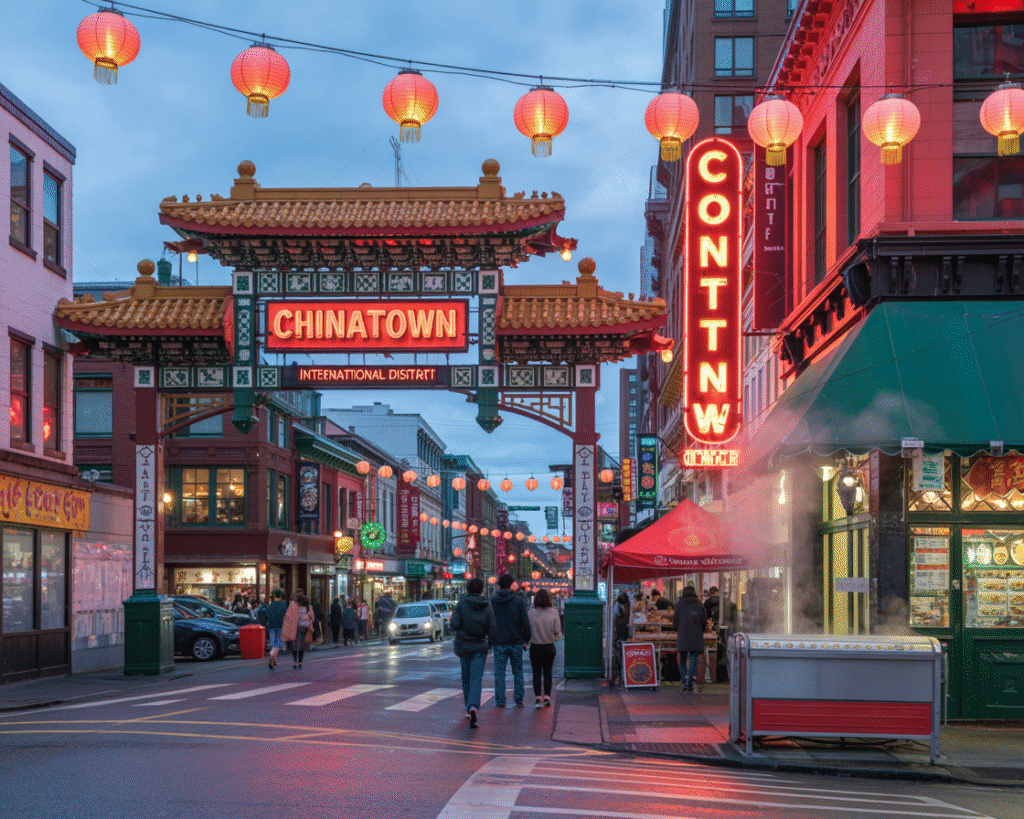
Seattle’s Chinatown-International District (CID) doesn’t do boring. It’s a tight-knit neighborhood where steaming bamboo baskets, mahjong clacks, and neon boba signs share the sidewalk with historic landmarks. You’ll find some of the city’s best bites, plus culture that goes deeper than a dumpling wrapper.
Ready to eat, explore, and maybe roll a few frames in a vintage bowling alley?
Start at Hing Hay Park and Follow the Lanterns
Hing Hay Park gives you an easy launch point. Grab a bench under the modern pavilion, watch tai chi in the morning, or catch live performances during festivals. It’s also your unofficial orientation hub: murals, lanterns, and directional signs make wandering feel like a treasure hunt. Pro tip: Come during Lunar New Year or the Night Market when the park turns into a block party.
You’ll find lion dances, food stalls, and, yes, the smell of grilled skewers that will haunt your dreams (in a good way).
Dumpling Crawl: Soup-Filled, Pan-Fried, and Everything In Between
Let’s address the main event: dumplings. The CID serves endless variations, and you absolutely should turn it into a mini crawl.
- Soup dumplings (xiao long bao): Delicate wrappers, molten broth, and the urge to ruin your mouth if you rush. Spoon, nibble, slurp, smile.
Repeat.
- Potstickers: Crispy bottoms, juicy centers. Add black vinegar and chili oil—don’t be shy.
- Shumai + har gow: You’ll see these at dim sum spots—shrimp, pork, and sometimes flying off carts faster than you can say “another round.”
How to Dim Sum Like You Mean It
– Go with friends so you can order aggressively. – Pace yourself: one dumpling basket at a time. – Try something you’ve never had—chicken feet, taro puffs, or turnip cakes. IMO, turnip cakes deserve their own fan club.
Slurp City: Noodles, Congee, and Late-Night Comfort
The CID knows how to comfort-feed.
You’ll find silky congee with preserved egg and pork, chewy hand-pulled noodles, and midnight bowls that taste especially great after a long day.
- Lanzhou-style hand-pulled noodles: Watch the noodle show, then dive into beef broth with cilantro and chili.
- Congee: Warm rice porridge crowned with scallions and crispy youtiao. It’s basically a hug in a bowl.
- Jjajangmyeon and pho: Don’t forget—“International District” means Korean and Vietnamese gems, too. FYI, the fusion options surprise in the best way.
Boba and Dessert Breaks
– Matcha and cheese foam teas: Trust the foam—it’s creamy, salty, sweet magic. – Egg tarts and sponge cake: Perfect for walking snacks. – Bubble waffle cones: Because your inner child deserves a crunchy, custardy hug.
Cultural Deep Dive: Museums, Temples, and Storytelling
You came for the food, but you’ll stay for the stories.
The CID holds generations of history—you can feel it in the architecture and the community spaces.
- Wing Luke Museum: A must. It’s the only pan-Asian Pacific American community-based museum in the U.S., and the exhibits hit hard—in a good way. Book a neighborhood tour for behind-the-scenes anecdotes.
- Historic temples and associations: Quiet courtyards and ornate altars sit just steps from busy streets.
Be respectful, look for posted signs, and keep voices low.
- Public art and murals: Scan walls and alleyways for colorful pieces that spotlight migration stories and local heroes.
Old-School Markets to Modern Grocers
Pop into family-run markets for tea, dried mushrooms, and snack packs you didn’t know existed. Then hit the larger Asian supermarkets for fresh seafood, hot deli counters, and that one sauce your friends swear by but never remember the name of.
Hidden Gems You’d Miss If You Blink
Let’s talk secrets—well, open secrets that locals love.
- Underground Mahjong and Tea Rooms: Not shady, just tucked away. Ask shopkeepers for recommendations—people love sharing their favorites.
- Vintage karaoke lounges: Private rooms, neon lights, and the satisfaction of belting 90s ballads.
Hydrate between power anthems.
- Specialty bakeries: Hunt down pineapple buns (no actual pineapple), cocktail buns, and black sesame everything. Warm buns sell out fast—go earlier in the day.
- Community gardens: Peek over the fences near residential pockets and you’ll spot choy, herbs, and edible flowers. It’s a living thread to immigrant roots.
Photo Stops That Aren’t Cheesy
– Hing Hay Park pavilion angles at golden hour – Lantern-lined streets near King and Jackson – Storefronts with bilingual signage and retro typography – Mural clusters along alleyways—color for days
Game On: Pinball, Bowling, and Late-Night Hangouts
When you need a break from eating (no judgment if you don’t), swing by a vintage bowling alley for old-school lanes and ice-cold sodas.
Pinball bars hide among the noodle shops, and you’ll find board game cafes where you can camp out for hours. Bonus: Some spots serve Taiwanese popcorn chicken or perfectly spicy wings. Gaming improves 10% with snacks—science probably says so.
Shop Small: Books, Gifts, and Tea You’ll Actually Use
Support the neighborhood’s indie shops. You’ll leave with goodies and a story.
- Bookstores: Asian lit, local authors, graphic novels, and cookbooks you’ll dog-ear immediately.
- Tea shops: Sample oolongs and pu-erh while learning proper steeping.
The right water temp changes everything, FYI.
- Ceramics and kitchenware: Pick up ramen bowls, bamboo steamers, and lacquered chopsticks that spark joy.
- Gift boutiques: Pins, prints, zines, and handmade goods from local artists.
If You Only Have Two Hours
– Start at Hing Hay Park – Grab soup dumplings and a boba – Pop into Wing Luke Museum – End with egg tarts to-go and a quick mural walk
Seasonal Events Worth Planning Around
The CID stays lively year-round, but festivals crank the dial.
- Lunar New Year Celebration: Lion and dragon dances, firecrackers, and vendor booths. Arrive early to snag good viewing spots.
- Summer Night Markets: Street food, crafts, and live music. Bring cash and an appetite.
- Dragon Fest: Cultural performances, martial arts demos, and discounted “$3 food walk” bites.
FAQ
Is Chinatown in Seattle the same as the International District?
The neighborhood goes by Chinatown-International District because it includes Chinese, Japanese, Filipino, Vietnamese, and other Asian communities.
You’ll see “CID,” “Chinatown,” and “International District” used interchangeably. Same area, broader identity.
Is it walkable and safe to explore?
Yes, it’s very walkable with dense clusters of shops and restaurants. Stick to main streets after dark, stay aware like you would in any city, and consider visiting with a friend.
Most places sit within a few blocks of each other, which makes exploring easy.
Where should I park?
Street parking exists but fills fast, especially on weekends and during events. Look for nearby paid lots or hop on light rail to the International District/Chinatown Station. IMO, transit saves you time and headache.
Do I need reservations for restaurants?
For popular dim sum and hot pot spots on weekends, yes—book ahead if you can.
Smaller noodle shops and bakeries usually don’t take reservations. Expect short waits during peak hours.
What should I definitely eat if I’m short on time?
Grab soup dumplings, a classic BBQ pork bun, and a milk tea—fast, iconic, and satisfying. If you can squeeze in one more bite, go for a crispy scallion pancake or roast duck over rice.
You’ll cover the essentials and still walk away happy.
Any tips for being a respectful visitor?
Support small businesses, ask before photographing people or altars, and pack out your trash. Learn a few basics like “xie xie” (thank you) and “ni hao” (hello). Small gestures go a long way.
Conclusion
Seattle’s Chinatown-International District hits you with flavor, history, and community all at once.
Come hungry, stay curious, and wander a little—you’ll find your own favorite dumpling shop, mural, or late-night tea bar. And when you do, don’t gatekeep it. Share the love, then come back for round two.