
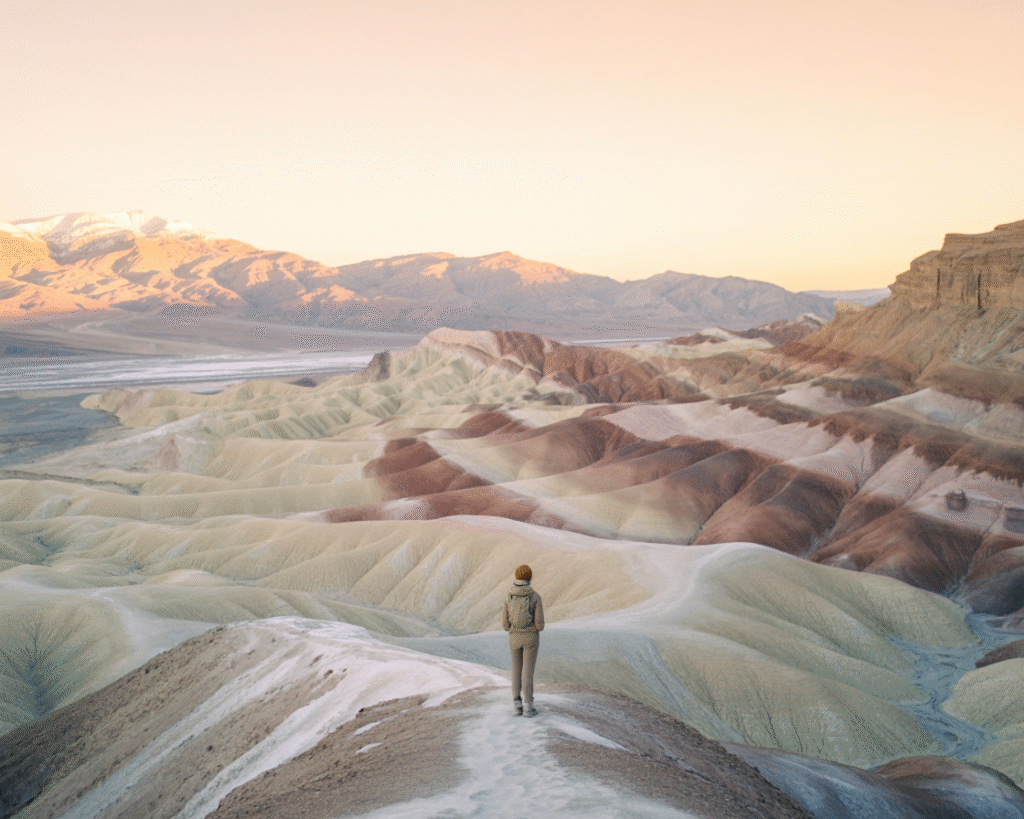
You’ve heard Death Valley is a summer furnace. December flips the script. Days feel crisp, trails open up, and the park shows off colors you miss when you’re melting.
If you want giant landscapes, empty trails, and sunsets that look fake, winter might be your golden ticket.
Why December Just Works
December in Death Valley is the park on easy mode. You get the drama without the heat stroke. Crowds shrink, the air clears, and you can actually stand on a salt flat without sizzling. Quick hits:
- Comfortable temps: 60s by day, 30s–40s at night at lower elevations.
- Fewer people: Except near Christmas/New Year’s, it’s shockingly quiet.
- Top hikes open up: Slot canyons and ridgelines feel inviting, not punishing.
- Sunrises and sunsets slap: Cooler air = crisper colors and long shadows.
December Weather: What You’ll Actually Feel
December doesn’t hit one note.
Death Valley spans huge elevation changes, so your experience can swing a lot.
- Furnace Creek (lower elevations): Highs 60–70°F, lows 37–45°F. Perfect hoodie weather.
- Dante’s View / Telescope Peak area (high elevations): Highs 30s–40s, lows below freezing. Expect wind.
- Rain? Rare, but possible.
When it rains, roads can close—flash floods don’t mess around.
- Wind: Some days whip. That breeze feels nice until it doesn’t.
What to Pack (Yes, You Still Need Layers)
- Base layers + a warm jacket: Mornings bite, especially before sunrise.
- Sun protection: Hat, sunglasses, SPF. The desert still deserts.
- Footwear: Solid hiking shoes with good grip for loose gravel and polished canyons.
- Water: Minimum 3 liters per person for day hikes.
It’s dry, FYI.
- Headlamp: Sunset comes fast. Trails go dark faster.
Trails You’ll Love in Winter
December turns “do not attempt” routes into “heck yes” adventures. You get big views without roasting.
Golden Canyon to Red Cathedral
Classic, short, and scenic.
You weave between gold walls and land at the base of a dramatic red formation. The late afternoon light makes the rock glow like a movie set.
Mosaic Canyon
A polished marble hallway with narrow slots and fun scrambles. Dry conditions make it a breeze.
If it rained recently, check for closures or slick sections.
Mesquite Flat Sand Dunes
Not a trail, but a choose-your-own-adventure. Go at sunrise for shadows and solitude. The sand stays cool in December—your feet will thank you.
Badwater Basin Salt Flats
Flat, easy, otherworldly.
Walk out far enough and you’ll hit hexagon patterns that look surreal. After rains, you might see shallow pools mirroring the mountains. Bring a camera—or your phone, let’s be real.
Desolation Canyon
Underrated and usually less crowded.
Short, colorful, with some mild scrambling. Sunset hits differently here.
Dante’s Ridge (for the motivated)
If you want a high-elevation ridge walk with giant views, this is the move. Dress warm and check the wind.
On clear days you can spot both the lowest point in North America and snowy Sierra peaks. Kinda epic.
A Winter Landscape With Surprises
December light turns Death Valley into an art show. Shadows carve out texture.
Colors pop. And if you’re lucky, a small storm paints the Panamints with snow. Keep an eye out for:
- Salt polygons at Badwater: Best after dry spells, they form crisp geometric patterns.
- Reflections: Post-rain pools create mirror-world photos at sunrise.
- Snow-dusted peaks: The contrast against the desert floor looks unreal.
- Wildlife: Coyotes, ravens, and the occasional fox get bolder when it’s cooler.
Sunrise and Sunset Picks
- Zabriskie Point (sunrise): Golden badlands turn molten. Get there early.
- Artist’s Palette (late afternoon): Minerals paint the hills green, pink, and purple.
No filter needed, IMO.
- Dante’s View (sunset): Massive panorama with dreamy light. Wind can be savage.
Driving, Roads, and Reality Checks
Death Valley looks easy on a map. It’s not small, and December weather can still nudge the plan.
- Road closures happen: Recent floods can keep Artist’s Drive or backroads closed.
Check NPS updates before you roll.
- Gas is limited: Fill up at Stovepipe Wells or Furnace Creek and don’t push it.
- Cell service: Spotty. Download maps offline.
- Backcountry roads: Many require high clearance; some need 4WD. Don’t wing it.
Daylight Hours and Timing
In December, you get roughly 9.5–10 hours of daylight.
Start early, prioritize a couple key stops, and bake in a sunset spot. Blue hour looks amazing here—hang around after the sun drops.
Where to Stay (and Why It Matters)
You can camp or grab a bed. December makes both doable, but book ahead near the holidays.
- Furnace Creek area: Central, near many highlights, warmer at night.
- Stovepipe Wells: Great for the dunes and Mosaic Canyon.
- Panamint Springs: Quieter, closer to western approaches.
- Camping: First-come options fill on weekends; bring warm sleeping gear.
Night temps can dip into the 30s.
Food and Supplies
You’ll find basic groceries and a few restaurants at Furnace Creek and Stovepipe Wells. Prices sit in the “we’re in the middle of nowhere” zone. Pack snacks, extra water, and coffee if you’re picky (I see you).
Safety Without the Lecture
You’ll feel great in December, but Death Valley still demands respect.
It’s remote. It’s dry. It doesn’t care about your clever caption. Do this and you’re golden:
- Hydrate anyway: You won’t feel sweaty, but you’ll still dehydrate.
- Watch the weather: If rain looks likely, avoid slot canyons and check road conditions.
- Tell someone your plan: Trails seem simple… until they don’t.
- Carry layers and a backup light: Sunset arrives early and temperatures plunge.
FAQ
Is December a good time to visit Death Valley?
Absolutely.
It’s one of the best months. You get comfortable temps, fewer crowds, and the park looks stunning in low-angle winter light. Just avoid the peak holiday week if crowds bug you.
Do I need a 4WD vehicle in December?
Not for the main sights.
Paved roads take you to Badwater, Zabriskie, Dante’s View, the dunes, and popular canyons. If you want backcountry spots (like the Racetrack), you’ll need high clearance, 4WD, and good tires—plus the patience of a saint.
Will I see snow?
Maybe on the higher peaks. The valley floor stays snow-free almost always.
Snow adds drama to the skyline and makes sunrise photos pop, FYI.
What’s the best sunrise and sunset combo for one day?
Sunrise at Zabriskie Point, mid-morning at Badwater and the salt flats, late afternoon at Artist’s Palette, and sunset at Dante’s View. If you’ve got energy left, a quick star session near the dunes seals the deal.
Are the salt flats always dry in December?
Usually, but not always. After a rain, they may hold shallow water.
That creates insane reflections but can turn the surface into sticky muck—don’t trample fragile areas if it’s soft.
How cold does it get at night?
Lower elevations hover in the 30s–40s, sometimes dipping lower. Higher elevations can drop below freezing with wind. Pack a warm jacket and a beanie—your ears will appreciate it, IMO.
Final Thoughts
December strips Death Valley to its best self—no heat haze, no sweat-drenched T-shirts, just clean air and cinematic light.
You can hike more, linger longer, and actually enjoy those wide-open spaces. Bring layers, a flexible plan, and a willingness to chase great sun. The desert will do the rest.