
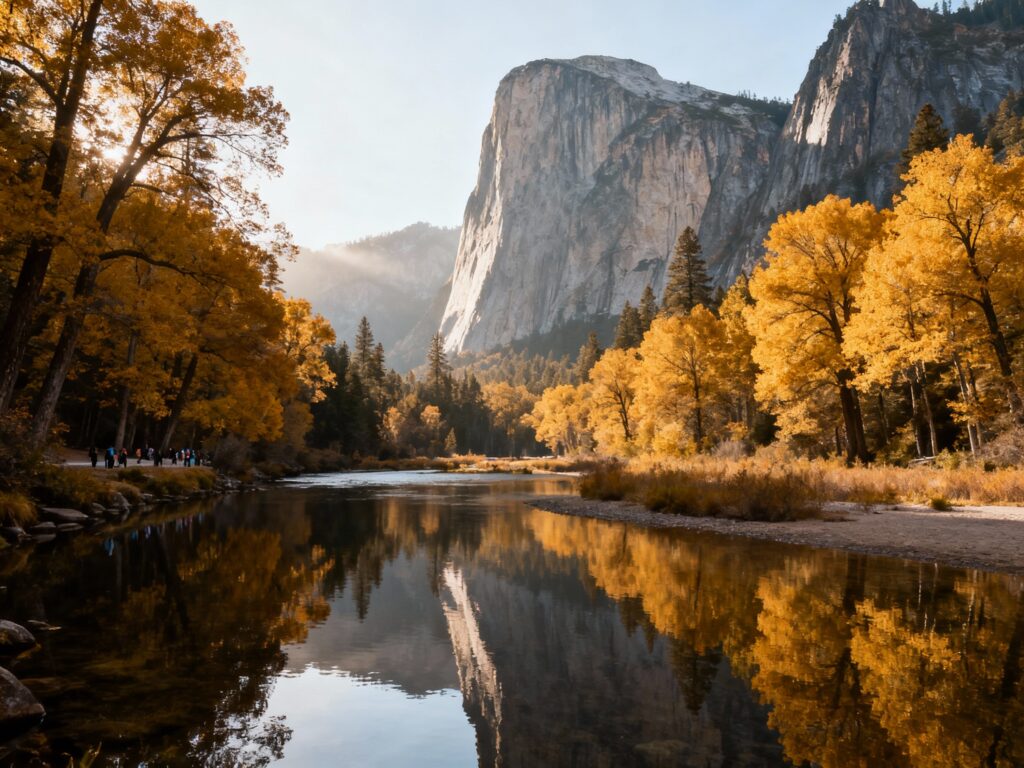
October in Yosemite is that sweet spot: cooler hiking temps, fewer crowds, and golden leaves in the Valley. Waterfalls can be lower this time of year, but the views? Still absolutely main-character energy.
Plan for crisp mornings and warmer afternoons, and start early because daylight is shorter. If you’re visiting for the first time, these five trails give you the best mix of iconic scenery and doable logistics.
Top 5
1) Mist Trail to Vernal Fall (via the Footbridge)
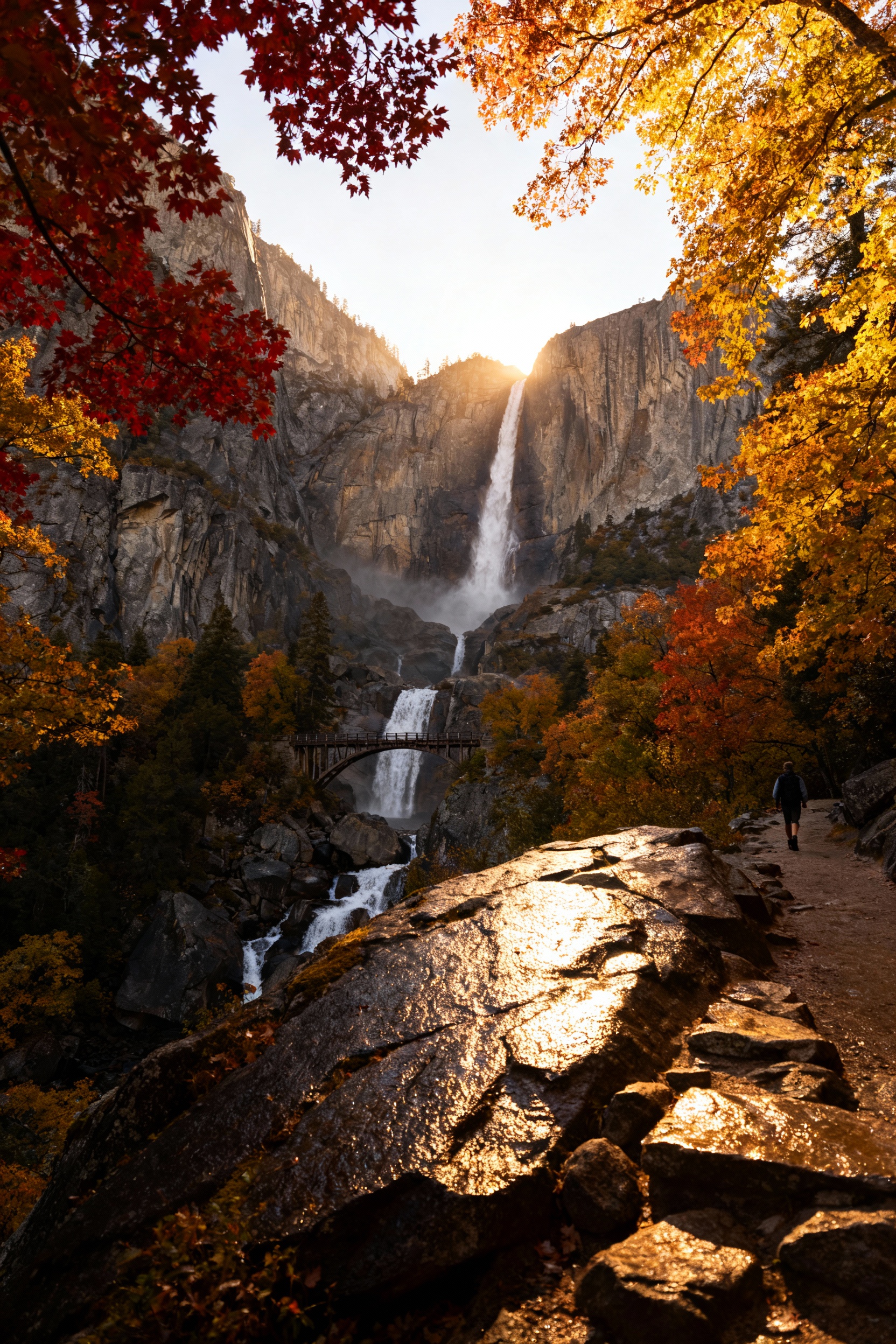
In October, the Mist Trail is less “soaked to the bone” and more “brisk and refreshing,” especially if you go early. Hike to Vernal Fall Footbridge for a classic waterfall view without committing to the full climb, or continue up if your knees are feeling brave. Wear grippy shoes because granite steps can be slick, and pack a light layer for the shaded sections. Aim for a weekday morning and park at Curry Village/Trailhead Parking, then walk or shuttle if it’s running.
2) Taft Point & Sentinel Dome Loop (Glacier Point Road area)
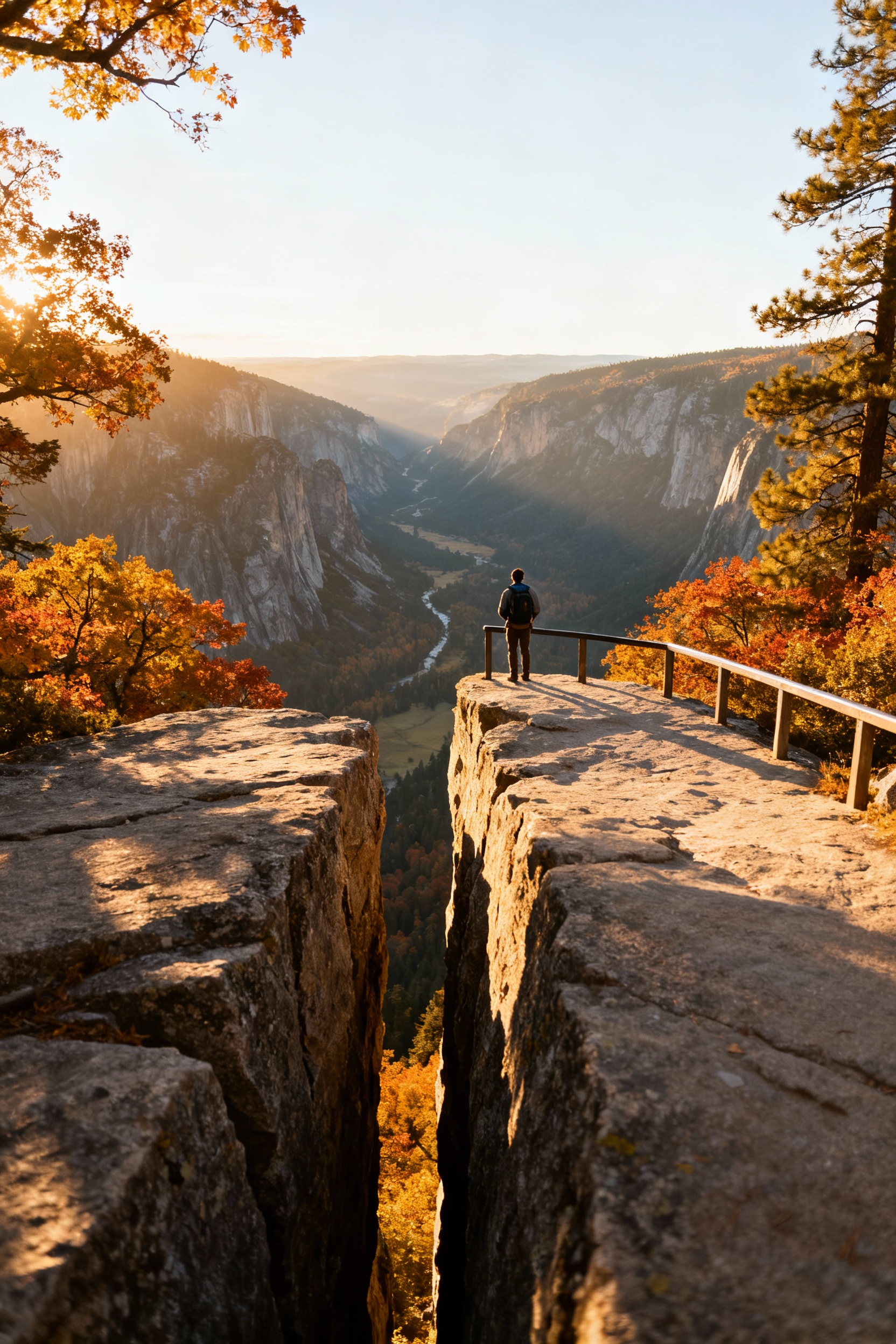
This is the fall colors + huge views combo that makes you feel like you found a cheat code. Pair Taft Point’s famous fissures and railing-free overlooks with Sentinel Dome’s 360-degree panorama for a half-day adventure. Bring a headlamp just in case—sunset is earlier in October and the walk back can get dim fast. Pack wind protection; it can be chilly on the exposed domes even when the Valley feels mild.
3) Yosemite Valley Loop Trail (choose a scenic segment)
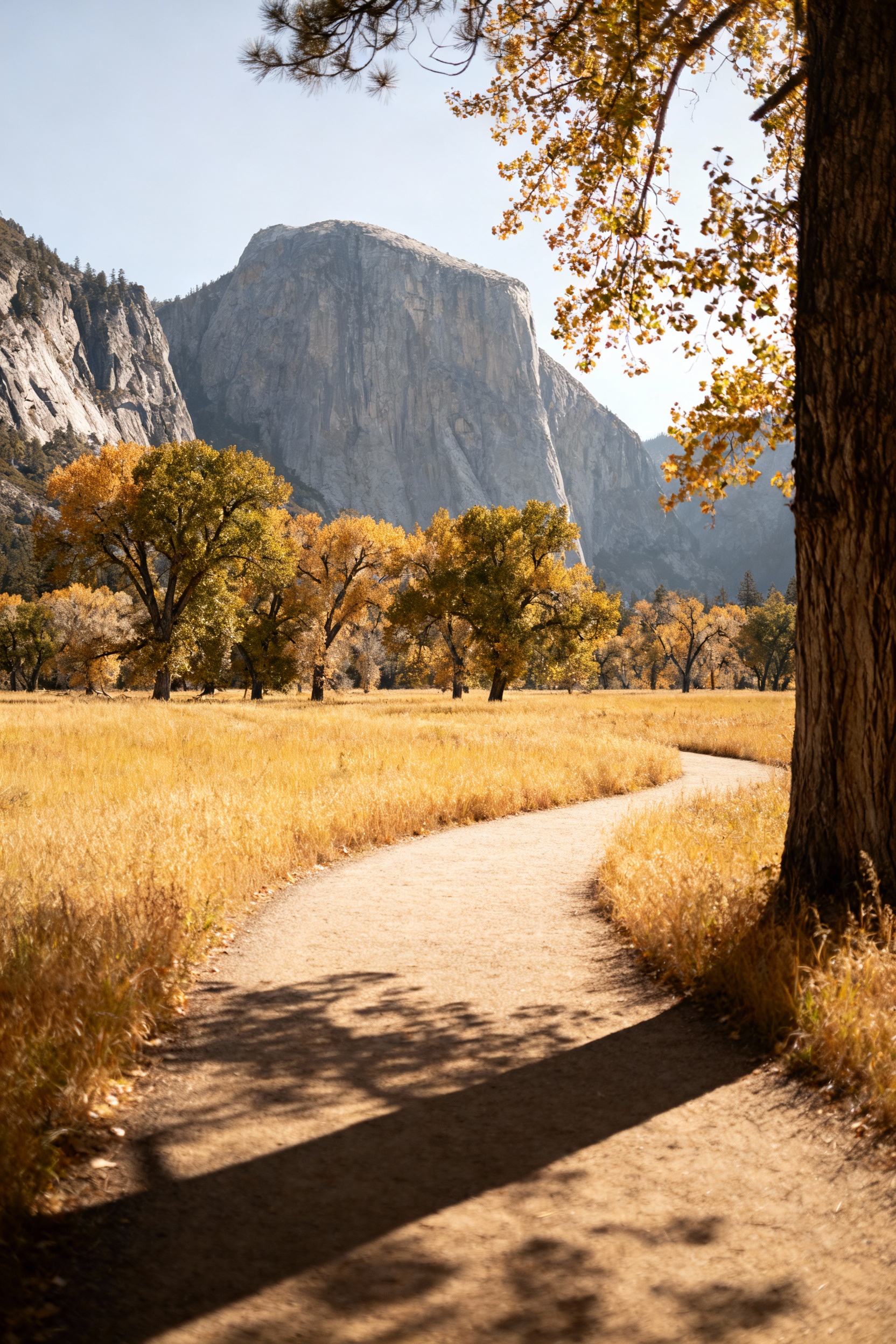
If you want maximum iconic scenery with minimum elevation stress, do a “best of” section of the Valley Loop instead of the full loop. For first-timers, a favorite plan is starting near Yosemite Valley Lodge and strolling toward El Capitan Meadow, then turning back when you’re ready. This is peak October vibes for golden trees, meadow views, and easy photo stops. Bring binoculars for climbers on El Cap, and dress in layers because the Valley can start cold and warm up quickly.
4) Mirror Lake Trail (quick win with big payoff)
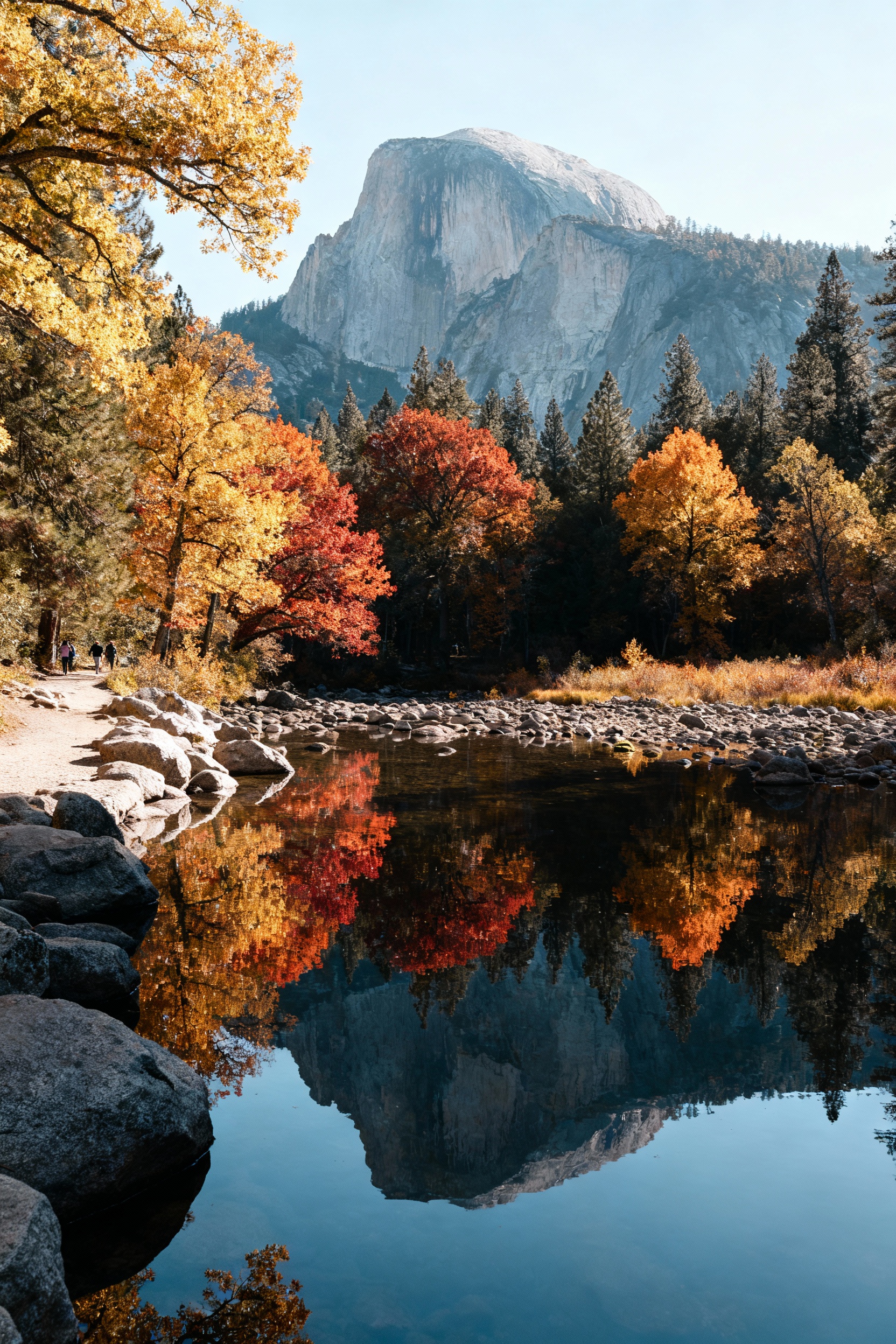
Mirror Lake is a classic first Yosemite hike, and October is perfect for it: cooler temps and calmer trails. The “lake” can be more like a peaceful pool later in the year, so go for the reflections and the up-close view of Half Dome rather than expecting a huge body of water. Start early for the best light and fewer people, and consider continuing past the main viewpoint for a quieter walk along the sandier paths. Bring a reusable water bottle and a snack—this is a great pre-lunch hike before exploring the Valley.
5) Four Mile Trail to Glacier Point (up or down, your choice)
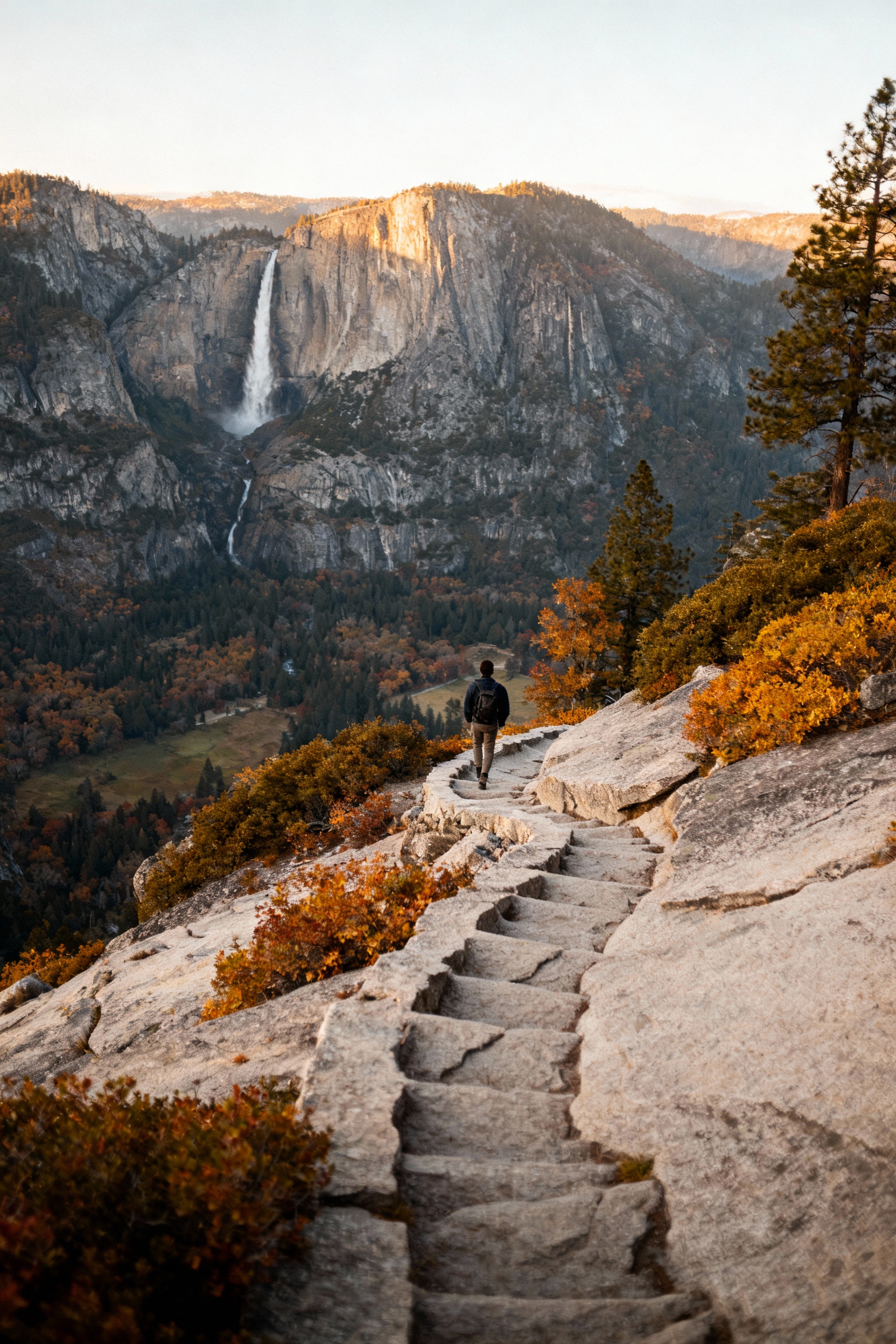
For the “I did Yosemite” brag, this trail delivers: steady switchbacks and nonstop views of Yosemite Falls and the Valley. In October, going up is more comfortable than summer, but it’s still a workout—budget 6–8 hours round trip if you’re hiking both ways. Check road and trail conditions before you go (seasonal closures can affect access), and plan a shuttle or second car if you want to hike one-way. Pack more water than you think, plus electrolytes and sun protection—the exposure adds up fast.
FAQ
Do I need a reservation to enter Yosemite in October?
It depends on the year and any temporary park management plans, so check the official Yosemite National Park website a week or two before your trip. Even if no entry reservation is required, lodging inside the park can still book up, so reserve early if you want to stay in the Valley.
What should I pack for hiking Yosemite in October?
Layers are everything: a light base layer, a warm mid-layer, and a windbreaker. Add grippy hiking shoes, a headlamp, at least 1–2 liters of water per person for shorter hikes (more for longer ones), snacks, and a small first-aid kit. Mornings can be cold, and afternoons can feel surprisingly sunny.
Are Yosemite waterfalls good in October?
Some waterfalls can be lower or even dry by fall, depending on snowpack and the year. You’ll still get incredible views on trails like Four Mile and in Yosemite Valley, and the cooler weather makes hiking more comfortable. If waterfalls are your top priority, focus on year-round options and check recent trail reports.
What’s the best way to avoid crowds on these trails?
Start early (think: on-trail by 8–9 a.m.), hike on weekdays, and choose shoulder times like late afternoon for easier trails. Also, pick “combo days” where you do one popular hike early (like Mist Trail) and save a quieter option (like Valley Loop segments) for midday.
Where should first-timers stay for easy trail access?
Staying in Yosemite Valley makes everything simpler: you’re close to trailheads, viewpoints, and shuttle stops. If Valley lodging is sold out or pricey, look at El Portal, Yosemite West, or Oakhurst for more options—just plan extra drive time and arrive early for parking.