
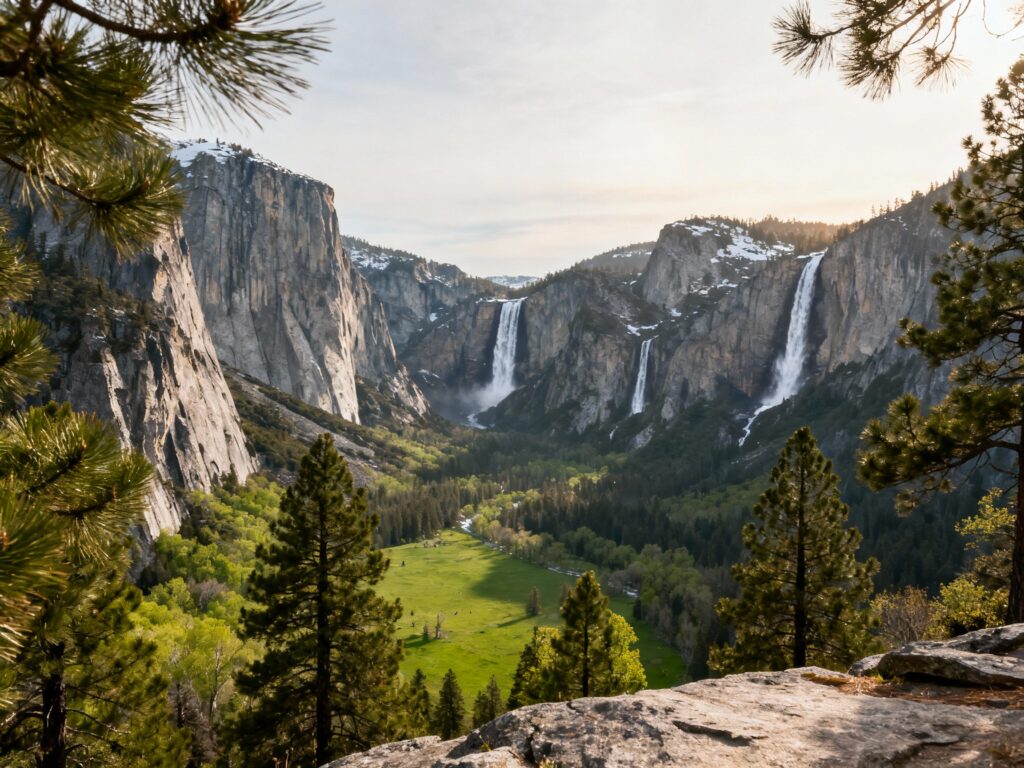
Yosemite waterfalls are the main character in spring and early summer, when snowmelt turns granite cliffs into a full-on water show. If you’re visiting for the first time, you’ll want a mix of iconic viewpoints and a couple of spots that feel a little more “I found this myself.”
Heads up: flow is seasonal. April through June is usually peak, with July fading in drier years. Pack a light rain jacket (mist is real), start early for parking, and keep an eye on trail conditions before you go.
Top 5
1) Yosemite Falls (Upper & Lower)
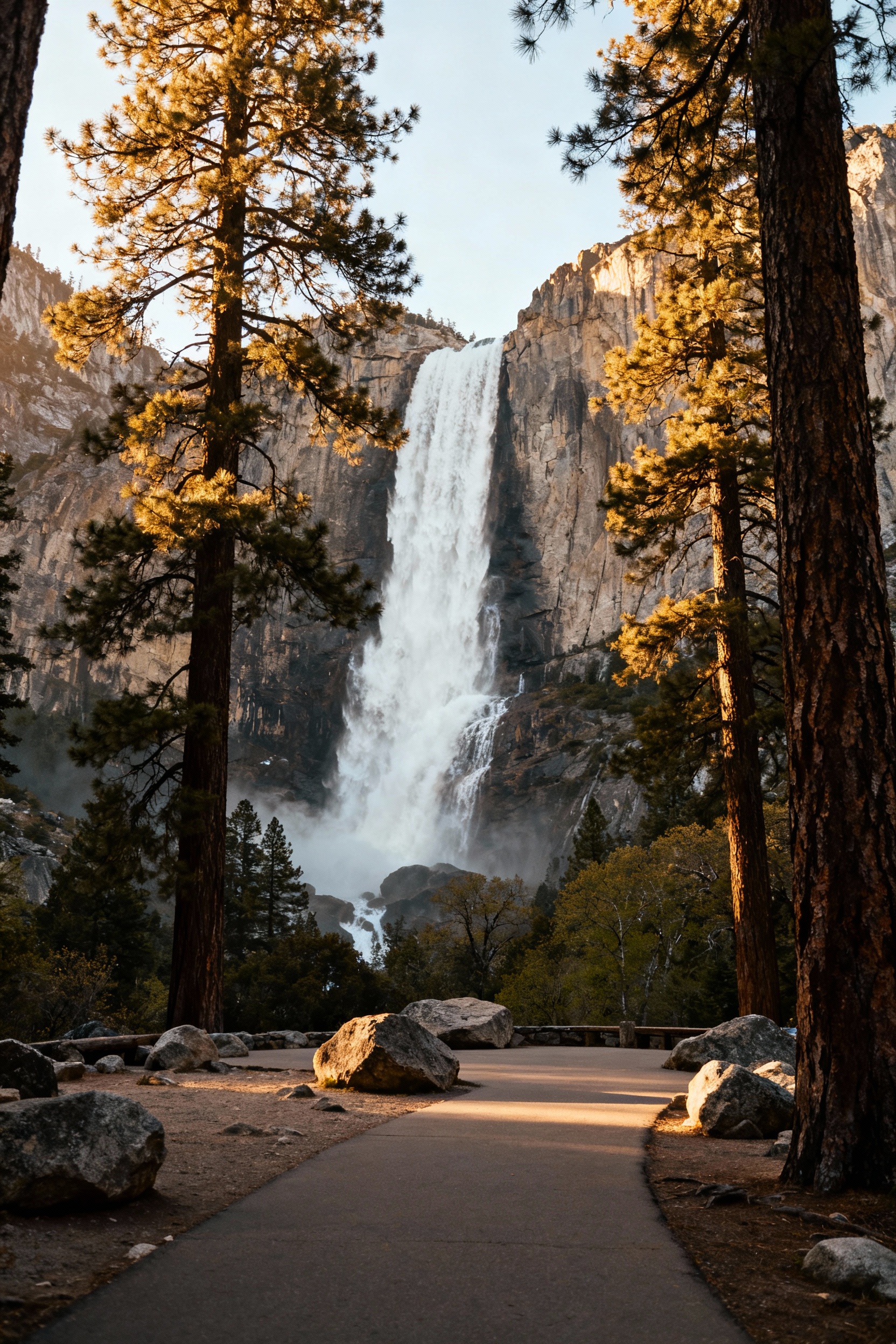
This is the classic: one of the tallest waterfalls in North America, and it’s right in Yosemite Valley. For an easy win, do the short walk to Lower Yosemite Fall early in the morning for quieter paths and softer light. If you’re hiking to Upper Yosemite Fall, start at sunrise, bring at least 2 liters of water per person, and expect a steep climb—trail runners or grippy hiking shoes make a difference. In peak season, consider parking once and using the free Valley shuttle to avoid circling for a spot.
2) Bridalveil Fall
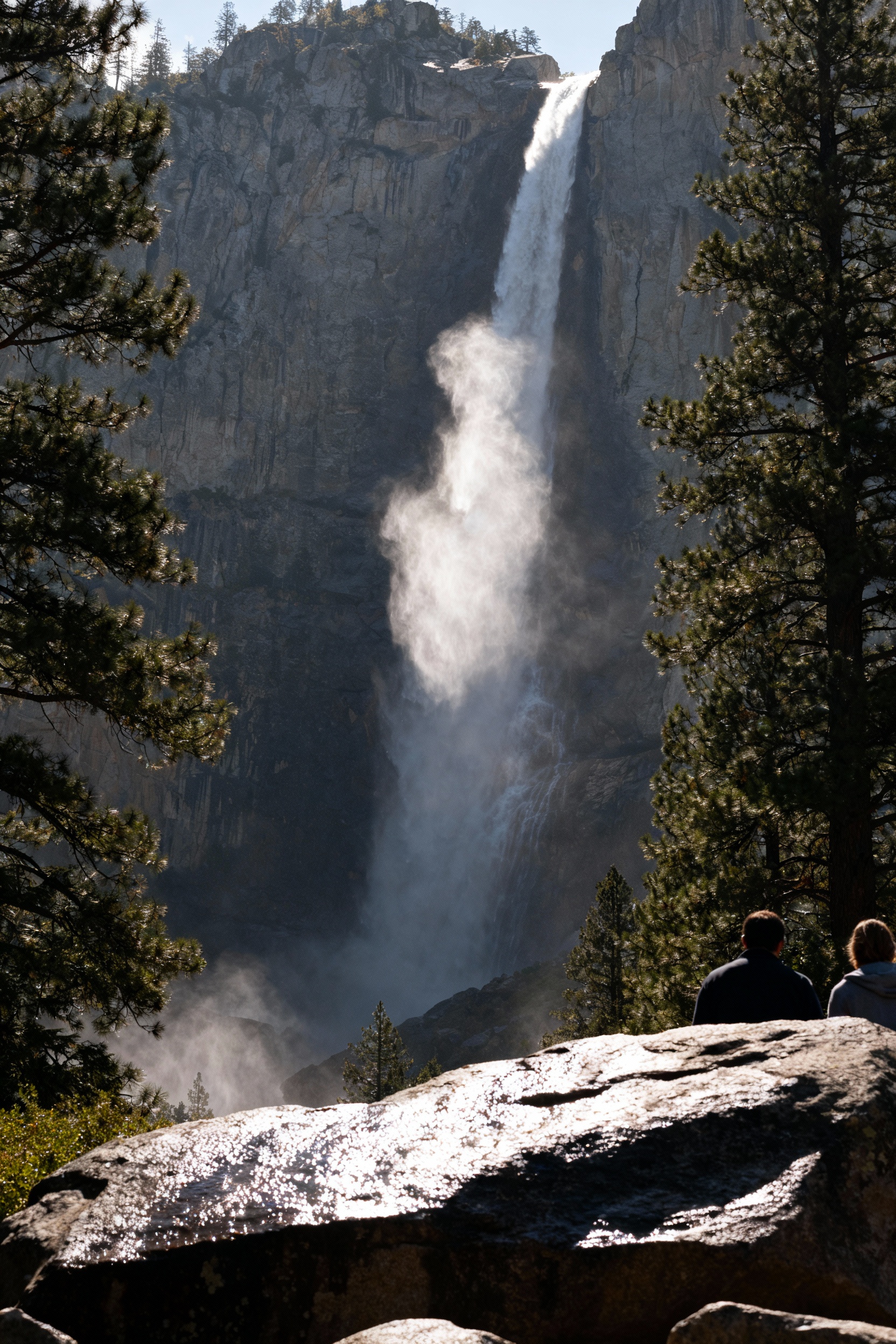
Bridalveil is one of the first waterfalls you’ll see when you enter the Valley, and it’s a must for that misty, cinematic moment. The walk to the viewpoint is short, but the spray can drench you in spring—pack a thin waterproof layer and a microfiber cloth for your phone camera. Go mid-morning for bright views and a better chance the sun hits the mist (hello, rainbows). If you’re tight on time, this is the easiest “big payoff” stop.
3) Vernal Fall (Mist Trail)
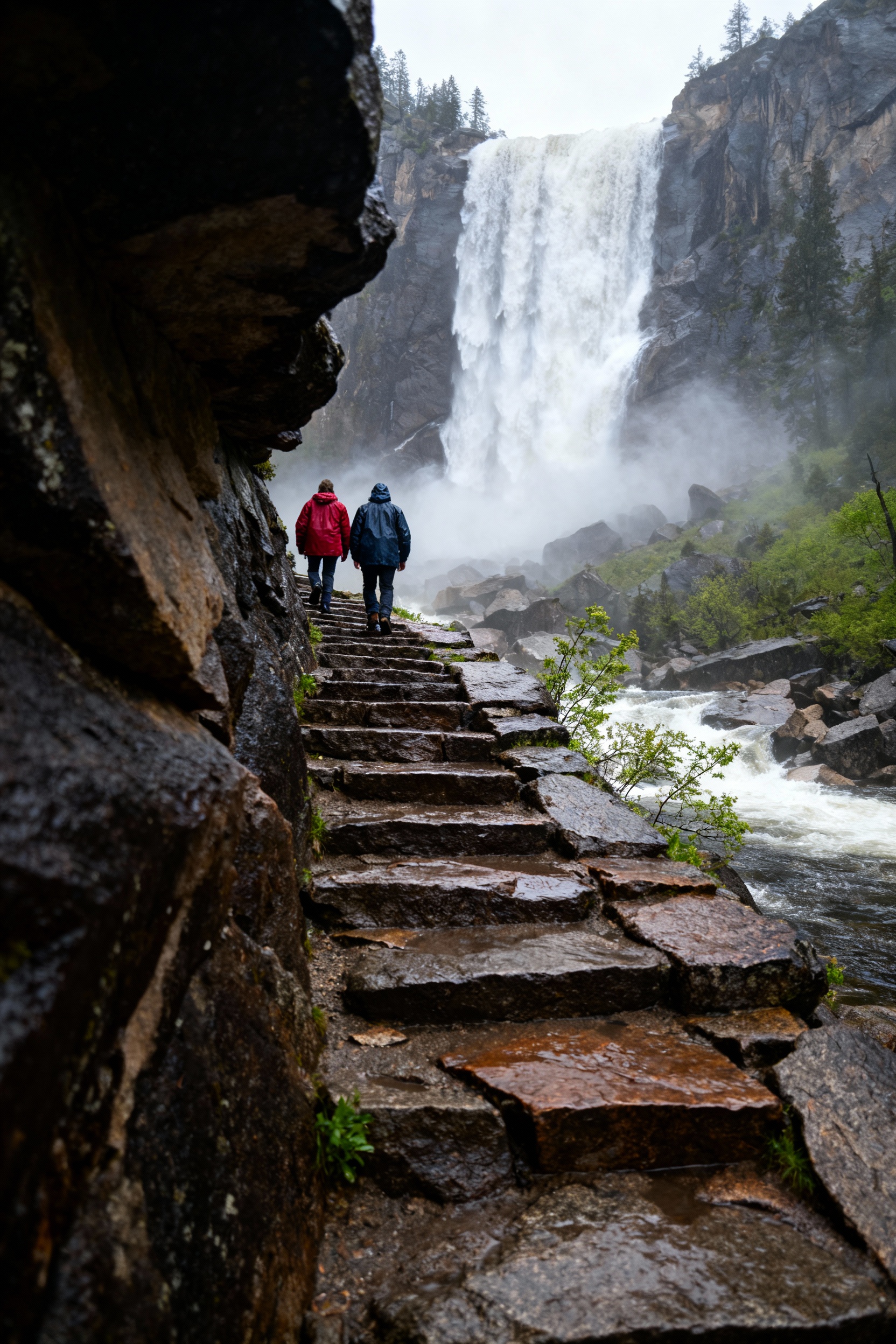
If you want a waterfall experience that feels like an adventure, put Vernal Fall at the top of your list. Take the Mist Trail up (it’s steep and wet) and aim for a weekday start before 8 a.m. to beat the crowds and heat. Wear shoes with solid traction and pack a light poncho—those stone steps get slick, and the mist is nonstop in peak flow. For a slightly calmer return, come down via the John Muir Trail for different views and fewer bottlenecks.
4) Nevada Fall
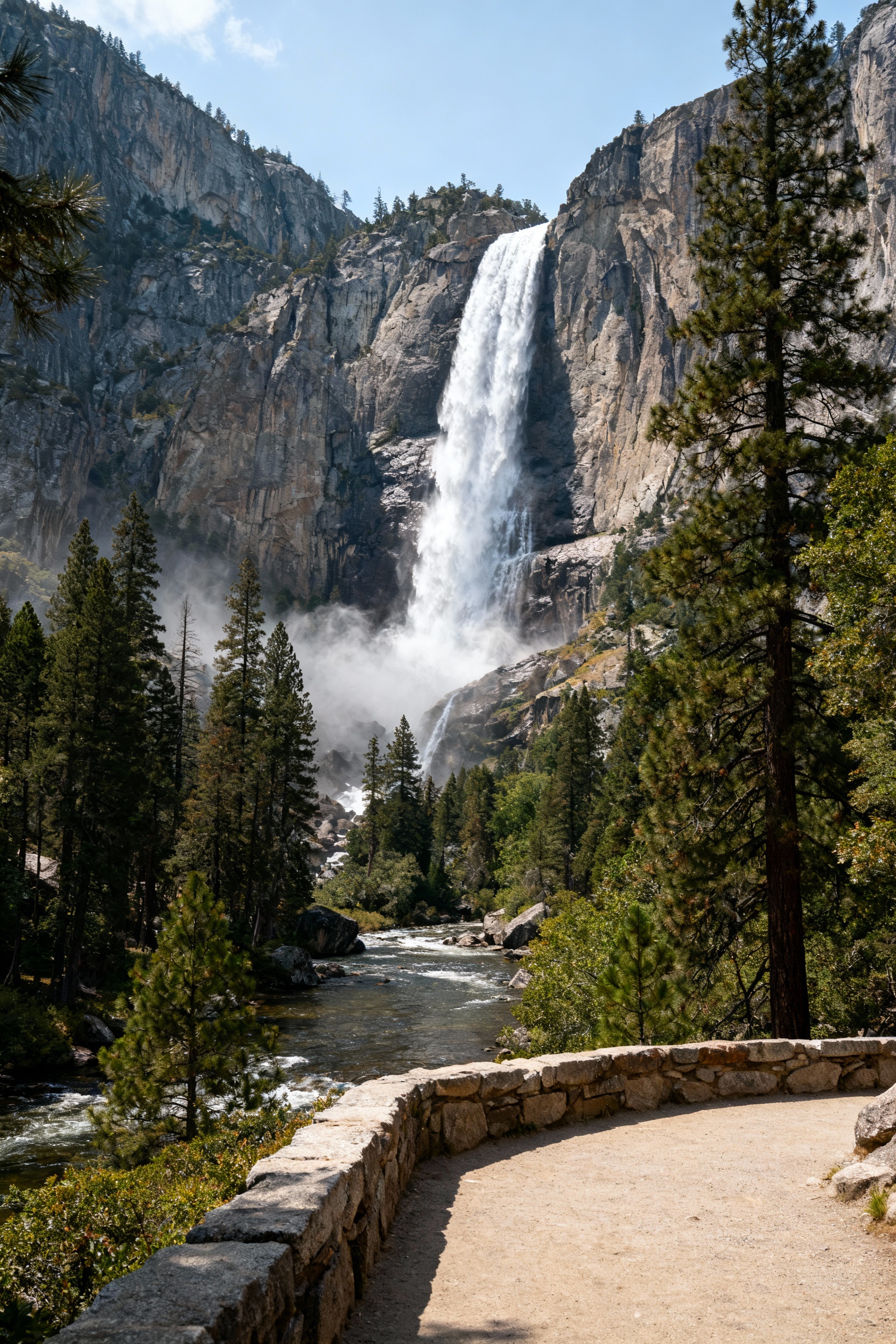
Nevada Fall is Vernal’s taller, louder sibling, and it’s absolutely worth continuing if you have the legs (and the snacks). Many first-timers underestimate the distance and elevation, so plan this as a half- to full-day hike and bring lunch plus electrolytes. The viewpoints above the fall are epic in late spring when the river is raging; by late summer, it’s still pretty but less dramatic. If you’re visiting in shoulder season, check for trail closures or icy sections and start only if conditions are solid.
5) Tuolumne Falls (Tuolumne Meadows Area)
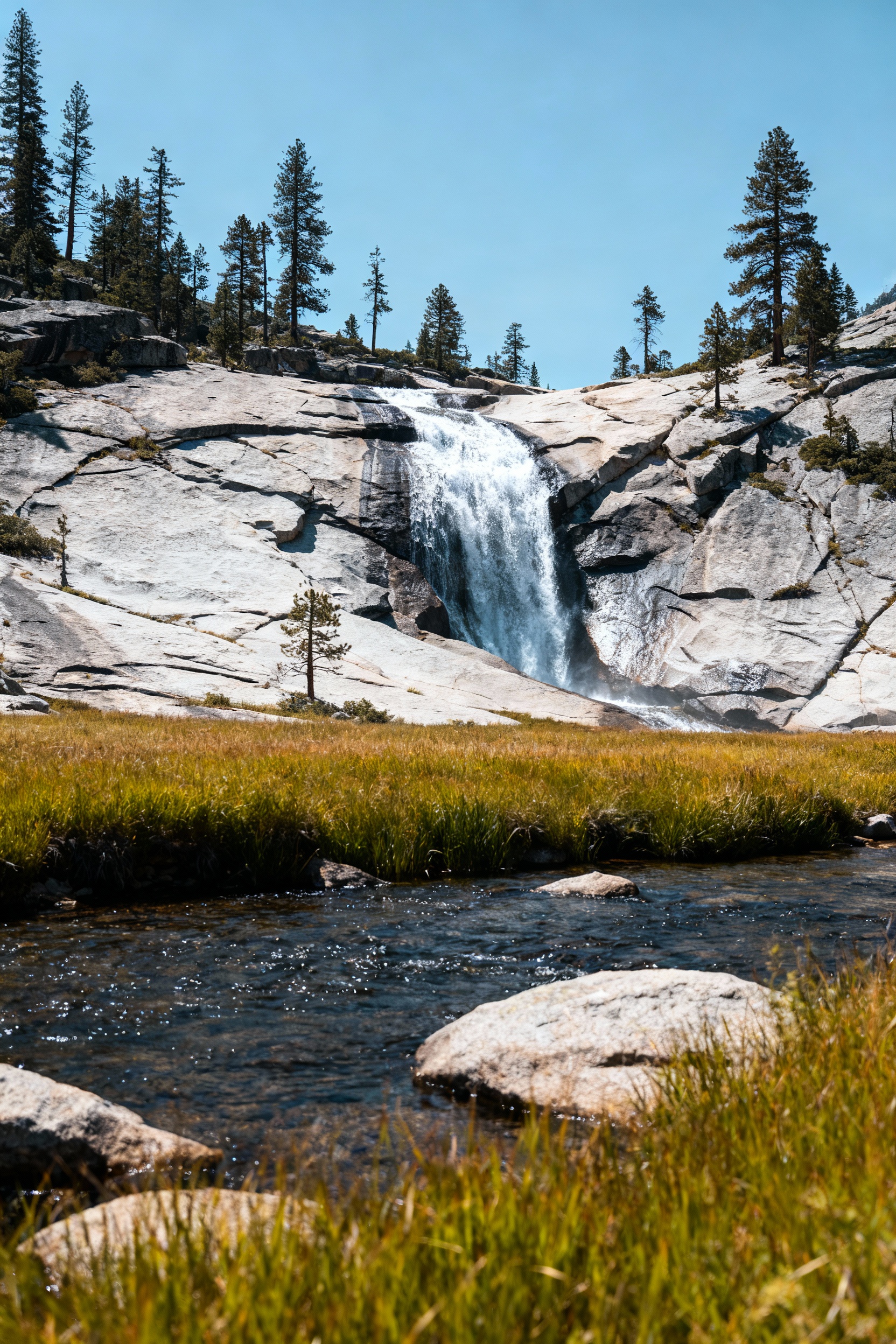
Want a break from Yosemite Valley crowds? Head to the Tuolumne Meadows area for a higher-elevation waterfall vibe and cooler temps. Tuolumne Falls is best as part of a day hike along the river—start early because this area can still fill up fast once Tioga Road is open. Pack layers (it’s chillier up here), sun protection, and plenty of water since services can be limited depending on the season. This is a great pick for late summer when some Valley waterfalls slow down.
FAQ
When is the best time to see waterfalls in Yosemite?
Typically April through June, when snowmelt is strongest. Peak flow often hits in May, but timing changes year to year based on winter snowfall and spring temperatures.
Which waterfall is easiest for a first-time visitor?
Bridalveil Fall and Lower Yosemite Fall are the simplest, shortest walks with major views. They’re great if you’re traveling with kids, limited mobility, or just want quick stops between scenic drives.
Do I need a reservation to enter Yosemite to see the waterfalls?
Entry requirements can change by season (especially during busy summer weekends). Check the official National Park Service Yosemite site before you go, and if timed-entry is in place, book as soon as your dates are set.
What should I pack for waterfall hikes like Mist Trail?
Bring grippy shoes, a light rain jacket or poncho, 1.5–3 liters of water per person (more on hot days), snacks, and sun protection. A small towel or lens cloth is also clutch for drying off your phone/camera after the mist.
Any safety tips for visiting Yosemite waterfalls?
Stay behind railings, don’t climb on wet rocks, and keep a safe distance from fast-moving water—currents are stronger than they look. Start early to avoid heat and crowds, and always check current trail conditions and closures before heading out.