
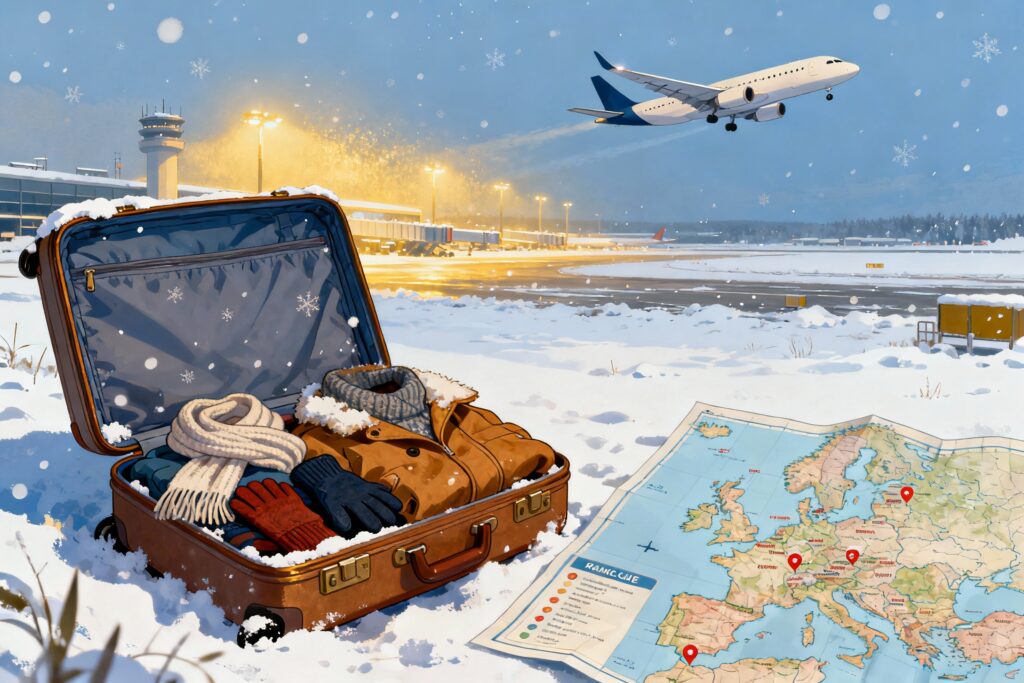
Winter in Europe looks like a snow globe until your fingers go numb and your flight gets delayed. But guess what? You can still have the best trip of your life if you plan smart.
Cheaper flights, fewer crowds, festive vibes, and hot chocolate as a lifestyle choice—what’s not to love? Let’s build your cold-weather game plan without turning it into a logistical headache.
Why Winter Is the Secret Best Time to Visit Europe
You get lower prices, shorter lines, and cozy cities that lean into the season. Christmas markets glow, castles look cinematic, and the Alps do their dramatic thing.
You also get winter-only experiences—saunas in Finland, thermal baths in Budapest, and night trains that feel straight out of a movie. Downside? Shorter daylight hours and some rural attractions close. But if you lean into urban exploring, museums, food, and a few winter sports, you’ll crush it.
Finding Smart Flights (Without a Spreadsheet)
Winter fares drop hard outside holidays. That’s your cue.
- Fly midweek: Tuesdays and Wednesdays often price the best.
Saturdays work better than Fridays and Sundays.
- Target shoulder weeks: Early December and late January to early March = sweet spot.
- Use hub strategy: Fly into a cheap hub (London, Paris, Frankfurt, Milan) and hop a low-cost carrier or train to your final city.
- Price alerts: Set alerts 6–10 weeks out. For Christmas/New Year’s, book 10–12 weeks in advance. IMO, deals appear fast and vanish faster in winter.
- Mix airports: Try alternate airports (e.g., Milan Bergamo, Paris Orly, London Gatwick) for better prices.
Carry-On vs Checked in Winter
If you can, go carry-on only.
Bulky layers kill space, but packing cubes and wearing your heaviest coat/boots onboard helps. If you must check a bag, keep a mini survival kit in your personal item: medications, a warm layer, toiletries, and a charging brick. FYI, winter delays happen.
What to Pack So You Don’t Freeze (or Overpack)
Base layers beat bulky sweaters every time.
Think “layer cake,” not “marshmallow.”
- Base: Merino or thermal top and leggings.
- Mid: Fleece or thin down jacket.
- Outer: Waterproof, windproof shell or insulated parka.
- Footwear: Waterproof boots with grippy soles. Add warm insoles and two pairs of wool socks.
- Accessories: Beanie, touchscreen gloves, neck gaiter or scarf, compact umbrella.
- Tech: Power bank, universal adapter, eSIM or data plan, hand warmers (clutch during night markets).
- Extras: Lip balm, heavy moisturizer, small thermos for tea or coffee, mini laundry detergent for sink washes.
How to Dress for Different Regions
- Nordics/Baltics: Prioritize windproof and insulated layers. Ice grippers if you’re clumsy (same).
- Central Europe: Cold and occasionally snowy.
Waterproof shoes win.
- Southern Europe: Damp chill gets you. A good midlayer + rain shell keeps you comfy.
- Alps: Ski gear plus real snow boots for town strolls.
Where Winter Shines: Trip Ideas by Vibe
Pick a lane—or mix two.
- Festive & Food: Vienna, Munich, Strasbourg, Prague. Hot wine, baroque architecture, pastries you’ll dream about.
- Snow & Scenery: Swiss or Austrian Alps, Dolomites, Norwegian fjords under snow.
- Mild-ish City Breaks: Lisbon, Seville, Athens—cooler but often sunny.
Great for ruins and long lunches.
- Saunas & Spas: Helsinki, Tallinn, Riga, plus Budapest’s baths and Switzerland’s mountain spas.
- Culture Bender: Paris, Rome, Madrid—museum marathons with almost no lines.
Sample Itineraries for Every Budget
Pick one that matches your time and wallet. Swap cities based on interest.
Budget: Cozy Classics on €60–€100/day (excluding flights)
7 days: Prague + Vienna
- Day 1–3: Prague. Old Town, Charles Bridge at dawn, beer halls, hearty stews.
Free walking tour, cheap trams.
- Day 4: Rail to Vienna (about 4 hours). Sip coffee at a classic café.
- Day 5–7: Vienna. MuseumsQuartier, Schönbrunn, Christmas markets if in season.
Eat trdelník and schnitzel; no regrets.
Where to save:
- Hostels with private rooms, public transit passes, lunch menus, bakeries for breakfast.
Mid-Range: Culture + Warmth + A Little Snow (€120–€200/day)
10 days: Lisbon + Madrid + Granada
- Day 1–3: Lisbon. Tram 28, Alfama fado, day trip to Sintra if weather behaves.
- Day 4–6: Madrid. Prado, Retiro, tapas crawls, churros con chocolate.
- Day 7–10: Granada.
Alhambra, Arab baths, Sierra Nevada day trip for snow views.
Why this works: Mild weather, value dining, and epic architecture without the crowds.
Splurge: Alpine Glow + City Chic (€250–€400/day)
8 days: Zurich/Lucerne + Zermatt + Milan
- Day 1–2: Zurich or Lucerne. Lakeside walks, fondue, Kunsthaus or transport museum.
- Day 3–5: Zermatt. Ski, snowshoe, or just ride Gornergrat for Matterhorn views.
- Day 6–8: Milan.
Duomo rooftop, aperitivo crawl, day trip to Lake Como if trains run smooth.
Pro move: Book scenic rail (Glacier Express leg) and spa hotels with saunas. It’s winter—lean into it.
Adventure: Northern Lights + Cozy Cities
6 days: Tromsø + Oslo
- Day 1–3: Tromsø. Aurora tours, dog sledding, polar museum.
Dress like you’re going to space.
- Day 4–6: Oslo. Saunas on the fjord, MUNCH museum, opera house rooftop if it’s not an ice rink.
Note: Book aurora tours early and stay flexible—weather calls the shots.
Trains, Planes, and Snowy Platforms: Getting Around
Europe’s rail network shines in winter—less airport chaos, more scenery.
- Trains: Book early for cheap fares on high-speed routes. Apps like SNCF, DB, Italo, and OBB work well.
- Night trains: Cozy and efficient.
Book a couchette or sleeper for sanity.
- Buses: FlixBus and BlaBlaCar Bus save money when trains get pricey.
- Low-cost carriers: Great for long hops. Factor bag fees and airport transfers.
Weather-Proof Your Plans
- Buffer time: Leave 2–3 hours between connections in snow-prone regions.
- Travel insurance: Get coverage for delays and cancellations. Winter loves drama.
- Local updates: Follow train operators on social and check live boards.
Eat, Drink, Be Toasty: Seasonal Food You Shouldn’t Miss
You will basically eat your way through winter.
Embrace it.
- Central Europe: Glühwein, sausages, goulash, schnitzel, chimney cakes.
- Italy: Risotto, polenta, truffle everything, hearty ragu, vin brulé.
- Nordics: Salmon, reindeer, cloudberries, cardamom buns, hot berry juices.
- Iberia: Churros, cocido, caldo verde, grilled sardines in Lisbon if lucky.
- Balkan comfort: Burek, bean stews, rakija to warm your soul (and face).
Money Moves: Save Without Suffering
- City passes: Worth it if you hit 2–3 museums a day.
- Lunch > dinner: Prix fixe midday menus are clutch.
- Free stuff: Many museums have monthly free days—check calendars.
- Tap water: Safe across most of Europe. Carry a bottle.
- Transit passes: Daily or weekly cards beat single tickets if you move a lot.
FAQ
Is Europe cheaper in winter?
Usually yes. Flights, hotels, and even some attractions cost less outside holidays.
Christmas and New Year’s spike prices, but late January and February offer serious deals. You’ll also save time since lines shrink.
Will everything be closed?
Cities stay lively. Big museums, shops, cafés, and major sights run normally.
Some smaller attractions and coastal spots reduce hours, and a few mountain roads close after storms. Check specific opening times and book marquee sights in advance.
How cold does it get?
Depends where you go. Nordics can hit deep freeze, Central Europe hovers around freezing, and Southern Europe feels cool and damp.
The right layers matter more than the number on the thermometer. Windproof outerwear = happiness.
Do I need special boots?
You need waterproof shoes with tread. They don’t have to be hardcore mountaineering boots unless you’re hiking or skiing.
A comfy pair you can walk 10k steps in will serve you better than stiff gear you’ll hate by day two.
What about daylight hours?
Short days mean you plan smart. Sightsee in daylight, save museums and meals for late afternoon/evening. In the far north, expect very limited light—magical sunsets, incredible auroras, but plan outdoor activities accordingly.
Can I do this carry-on only?
Yes, if you pack layers and wear the bulky stuff on the plane.
Roll clothes, use packing cubes, and keep shoes to two pairs max. IMO, going light reduces stress when you face stairs, snow, and tiny hotel elevators.
Conclusion
Winter Europe rewards the savvy traveler: cheaper flights, cozy culture, and cities without elbow wrestling. Pack smart, chase festive food, and build in weather wiggle room.
Do that, and you’ll unlock the dreamiest version of Europe—no filter necessary.