
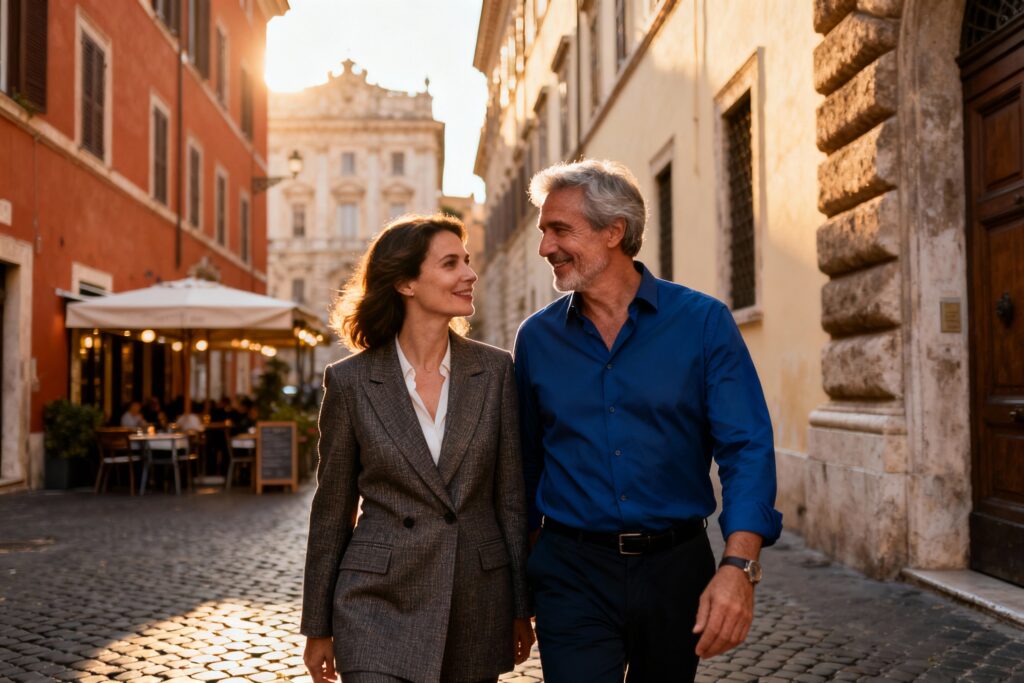
You want Europe without the chaos, but with all the charm? Same. You’ve earned the right to travel on your terms—long lunches, art you actually have time to enjoy, and hotels where the pillows matter.
Europe in your 50s isn’t about ticking boxes. It’s about savoring places that feel stylish, cultured, and gloriously unhurried.
Why Europe Hits Different In Your 50s
You know what you like now, and you don’t waste time pretending otherwise. That means curated itineraries, fewer lines, and a lot more wine.
Europe rewards this kind of travel with cities and towns that pair elegance with ease. Pro tip: Travel in shoulder seasons (April–June, September–October). You get great weather, slimmer crowds, and better room rates. You also get calmer locals—important when you need help with train platforms or ordering that second round of cicchetti.
Slow-Down Classics With Style
Europe has icons for a reason, but you don’t need the “doing it for the ’gram” pace.
Think culture-forward trips with room to breathe.
Florence, Italy: Renaissance on Foot
Florence gives you art, architecture, and pasta—no car required. Stay near the Oltrarno and you’ll feel like a temporary local. Walk to the Uffizi in the morning, linger on artisan streets in the afternoon, and find a tiny trattoria at night.
- Don’t miss: A timed ticket for the Accademia (David waits for no one), a sunset stroll across Ponte Vecchio, and a craft workshop tour in the Oltrarno.
- Stay vibes: Small design hotels in historic palazzi.
Quiet. Romantic. Great beds.
Vienna, Austria: Coffee, Culture, Composure
Vienna wraps you in grand cafés and symphonies.
Sit in a velvet booth and read the paper—no one rushes you. Even the museums feel civilized.
- Don’t miss: The Belvedere’s Klimt collection, a night at the Staatsoper, and a slice of Sachertorte. Calories don’t count on holiday.
- Move around: Trams are efficient, clean, and blessedly intuitive.
Hidden-Gem Towns That Whisper, Not Shout
You still want beauty, just without bus tours spilling into every square.
Enter Europe’s small-town magic.
Lucca, Italy: Walled Serenity
Lucca’s Renaissance walls double as a tree-lined walking path. Rent bikes, do a lazy lap, then wander into shaded streets for a glass of Vermentino.
- Best for: People who like gentle activity and great food minus crowds.
- Day trips: Pisa, Pietrasanta, and Tuscan vineyards—easy and delightful.
Aix-en-Provence, France: Sunlit Elegance
Aix packs markets, fountains, and Cézanne into a compact, walkable center. It’s chic without trying too hard.
- Don’t miss: Cours Mirabeau markets, Atelier de Cézanne, and rosé-fueled lunches.
- FYI: Book dinner terraces ahead in high season.
Aix gets popular for a reason.
San Sebastián, Spain: Bite, Stroll, Repeat
The city does food like it’s a competitive sport. Pintxos bars line the old town, beaches curve for sunset walks, and everything feels refreshingly polished.
- Don’t miss: Pintxo-hopping on Calle 31 de Agosto, surf-watching on Zurriola, and a day trip to Getaria for grilled turbot.
- Stay tip: Choose a hotel on or near La Concha for dreamy views and easy strolls.
Coastal Calm, With Culture On Tap
Beach towns often mean chaos. These spots deliver serenity and style with a side of history.
The Algarve, Portugal: Clifftops and Calm
Avoid party hubs and aim for Tavira, Carvoeiro, or Lagos old town.
Think golden cliffs, low-key seafood, and coastal trails.
- Do: Boat the Benagil caves early morning; walk the Seven Hanging Valleys trail.
- Eat: Grilled sardines, cataplana, and vinho verde. Simple, perfect.
Istria, Croatia: Tuscany’s Adriatic Cousin
Hill towns, olive groves, truffles—sound familiar? Istria steals all the right moves and adds the Adriatic.
- Base: Rovinj for seaside charm; Motovun or Grožnjan for hilltop views.
- Extra: Winery tastings and olive oil mills that welcome unhurried visits.
City Breaks That Don’t Exhaust You
You want energy, not chaos.
These cities keep things manageable—walkable centers, strong culture, and quality downtime.
Copenhagen, Denmark: Effortlessly Cool
Bikes everywhere, canals, and New Nordic cuisine. You can tour palaces by day and dine fabulously by night without melting down.
- Plan: Rosenborg Castle, canal cruise from Nyhavn, and a half-day to Louisiana Museum of Modern Art.
- Comfort watch: Copenhagen is ludicrously safe and clean. Your cortisol will thank you.
Seville, Spain: Orange Blossoms and Flamenco
Seville serves warmth—in weather and personality.
Courtyards, tapas, and Moorish architecture that glows at golden hour.
- Musts: Alcázar gardens, the Cathedral and Giralda, and a flamenco show in a small peña.
- IMO: Spring (April–May) beats peak summer by a mile. You’ll avoid the furnace effect.
Itineraries That Flow (Not Frenzy)
Let routes breathe. Three to five nights per stop is the sweet spot.
Here are easy combos that feel seamless, not stressful.
- Tuscany Trio: Florence (art) → Lucca (calm) → Siena or Chianti (wine). Add a driver for vineyard days.
- Sunlit Circuit: Aix-en-Provence → Luberon hill towns → Nice for coastal glamour and Matisse.
- Northern Charms: Copenhagen → Stockholm by train → Gothenburg for seafood and garden strolls.
- Atlantic Flavor: Lisbon → Sintra day trip → Algarve rest-and-recharge.
How to Pace Your Days
- Morning: One “big” thing (museum, palace, hike).
- Afternoon: Long lunch, neighborhood wandering, light shopping.
- Evening: A show, sunset walk, or wine bar. Repeat.
Joyfully.
Where Comfort Meets Character
You deserve better than a dodgy mattress and a view of an alley. Book places that deliver atmosphere and sleep quality.
- Boutique hotels: 20–60 rooms, local design, personal service. Often in historic buildings.
- Apart-hotels: Kitchenette convenience without sacrificing style.
- Villas (1–2 weeks): Ideal in Tuscany, Provence, Istria.
Add a private chef once. Thank me later.
What to Look For
- Location first: Walk to dinner. Your ankles will thank you.
- Soundproofing and AC: Old Europe gets lively.
You’ll sleep better.
- Elevator or ground floor: Historic stairs look cute until suitcase day.
Effortless Planning: The Low-Stress Toolkit
Yes, you can book it all yourself and still keep your sanity. Mix smart tools with human help.
- Trains: Use national rail sites or apps like Trainline for clear schedules and seat selection.
- Dining: Book top restaurants 2–4 weeks out. Leave one night open in each city for spontaneity.
- Museum tickets: Always prebook timed entries for big hitters.
- Tours: Choose small-group or private guides for context without crowd fatigue.
Health and Comfort Tips
- Pack: Supportive shoes, light layers, a compact umbrella, and meds in carry-on.
- Hydrate and rest: Jet lag feels louder in your 50s.
Short afternoon resets help.
- Insurance: Add travel medical coverage. It’s boring until it’s not.
FAQ
What’s the best time to visit Europe for comfortable weather and fewer crowds?
Aim for April–June and September–October. You get pleasant temperatures, open attractions, and more availability.
July and August can feel hot, expensive, and crowded—still fun, but more effort for the same sights.
How long should I spend in each destination?
Three to five nights per stop works beautifully. You sink into the rhythm, try more restaurants, and dodge the “pack-unpack-pack” nightmare. IMO, two nights equals a tease.
Do I need to rent a car?
Not always.
Trains cover most major routes smoothly. Rent a car for countryside hubs like Tuscany, Istria, or the Luberon, where vineyards and villages spread out. Choose automatics early—they book fastest.
What kind of accommodations balance comfort and character?
Boutique hotels and well-reviewed apartments hit the sweet spot.
Look for central locations, strong Wi‑Fi, quiet rooms, and reliable AC. Read recent reviews to avoid “charming” turning into “noisy.”
How do I avoid long lines at major attractions?
Prebook timed entries for museums and monuments. Go early or late in the day.
Consider guided skip-the-line tours for complex sites—worth it for context and saved energy.
Any packing advice for stylish yet practical travel?
Think capsule wardrobe: neutral layers, one standout scarf or jacket, and shoes that handle cobblestones. Add a crossbody bag and a lightweight rain shell. FYI: laundry services and hotel pressing save suitcase space.
Conclusion
Europe in your 50s feels like travel upgraded: slower, smarter, and way more satisfying.
Choose destinations that match your pace, build in breathing room, and say yes to the long lunch. The art, the coastlines, the wine—they all taste better when you don’t rush. IMO, that’s the real luxury.