
First-Timer’s Guide to Planning a Magical Switzerland Trip
Planning your first Switzerland trip can feel like trying to pick just one chocolate at a Swiss shop: everything looks amazing, and you don’t want to choose wrong. The good news? Switzerland is one of the easiest countries to do “big scenery” without big stress. With a smart home-base plan, a couple of iconic mountain days, and the train system doing the heavy lifting, your trip can feel magical and actually relaxing.

1) Pick the right season (and set expectations)
Switzerland is gorgeous year-round, but your experience changes a lot by season. For first-timers, late spring (May–June) and early fall (September) are sweet spots: good daylight, comfortable temperatures, fewer crowds, and better room rates. July–August brings the biggest crowds and the highest prices. Winter is dreamy if you’re skiing, but if you’re not, some high-altitude sightseeing can be limited by storms or lift schedules.
Build one “swap day” into your plan. If a mountain is clouded out, pivot to a museum day, a lake cruise, or a cozy old-town stroll—and try the peaks again the next morning.
2) Build around 2–3 bases (not 8 stops)
The classic first-timer mistake is trying to “see it all.” Switzerland rewards slow travel. Choose 2–3 bases and day trip from each. You’ll spend less time dragging luggage and more time lake-cruising, hiking, and lingering over fondue.
- Zurich (1–2 nights): easy airport arrival, museums, river walks, and simple day trips.
- Lucerne (2–3 nights): lakeside charm, postcard bridges, and quick access to Mt. Rigi and Pilatus.
- Interlaken / Lauterbrunnen Valley (3–4 nights): waterfalls, car-free villages, and the Jungfrau region.
Want a French-leaning route? Swap Zurich/Lucerne for Geneva + Montreux, then add Zermatt for Matterhorn energy. The rule stays the same: pick hubs that make day trips effortless.

3) Trains: your secret weapon
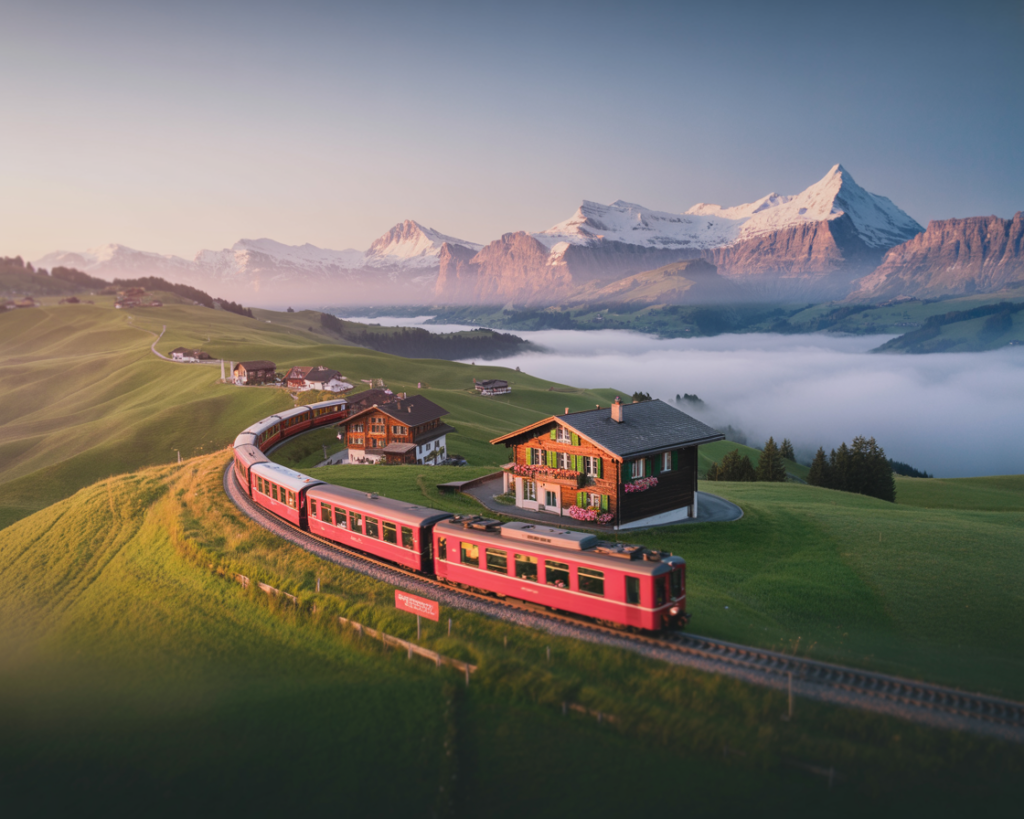
Switzerland’s public transport is the main character. Download the SBB Mobile app and treat trains like your ride-share: frequent, clean, and delightfully predictable. You can plan routes, check platforms, and buy digital tickets in minutes. On scenic routes, sit on the window side and keep your camera ready—some journeys feel like a moving postcard.
Which pass should you get? It depends on how often you move and how many mountains you plan to ride.
- Swiss Travel Pass: great if you’ll be moving often and using boats + museums.
- Half Fare Card: often the best value if you’ll do fewer long rides but several pricey mountain lifts.
If you’re unsure, list your “big rides” (intercity trains + 1–2 mountain excursions) and compare totals. Many first-time itineraries do well with the Half Fare Card plus point-to-point tickets.
4) Choose one “big mountain day” per base
Mountain excursions are stunning, but they’re also the most expensive and weather-dependent part of your trip. Plan one headline mountain day per base, keep your schedule flexible, and you’ll avoid the “spent money to see clouds” heartbreak.
- From Lucerne: Mt. Pilatus (cogwheel/cable car loop) or Mt. Rigi (iconic views + easier pacing).
- From Interlaken: Mürren + Schilthorn for dreamy peaks, or Jungfraujoch for a bucket-list splurge.
- From Zermatt: Gornergrat railway for Matterhorn panoramas without intense hiking.
Balance your big day with a gentler one: a lakeside promenade, a short valley hike, a chocolatier stop, or a spa afternoon. You’ll enjoy the “wow” more when you’re not exhausted.

5) Where to stay for maximum magic
Location matters more than hotel “stars.” You’ll thank yourself every time you can walk to dinner, roll into the station easily, or wake up to a lake view without a commute.
- Cities: stay walkable to the old town and main station for easy day trips.
- Lucerne: lakefront or near the Chapel Bridge area for sunrise strolls.
- Jungfrau region: choose Wengen or Mürren for quieter, car-free charm; Interlaken is more practical than romantic.
Comfort check: AC isn’t universal in older hotels, and “charming” can sometimes mean “noisy.” Read recent reviews for soundproofing and summer comfort.
6) Budget without killing the vibe
Yes, Switzerland is pricey—but you can do it smart. Make lunch a picnic (supermarkets like Coop and Migros are excellent), drink tap water, and save your splurges for the things that truly feel Swiss: a mountaintop view, a lake cruise, or a cozy hotel with a balcony.
If you’re watching costs, prioritize:
- One iconic mountain day (instead of three average ones).
- Free scenic walks: lakesides, old-town climbs, and valley trails.
- Hotel breakfasts that keep you full until late afternoon.
7) What to pack (first-timer edition)
Swiss weather can change fast, especially above the valleys. Pack like a minimalist who hates being cold: layers over bulk.
- Musts: comfortable walking shoes, light puffer/fleece, rain jacket, sunglasses + sunscreen, small daypack, reusable water bottle.
- Nice-to-have: blister care, hiking socks, a compact umbrella, and a universal power adapter.

8) A stress-free 7-day itinerary
- Day 1: Arrive Zurich. Keep it light: river walk, easy dinner, early sleep.
- Day 2: Old Town + one museum. Evening train to Lucerne.
- Day 3: Lucerne lake cruise + viewpoint stroll.
- Day 4: Pilatus or Rigi (choose the clearer day). Relaxing lakeside dinner.
- Day 5: Train to Lauterbrunnen/Wengen. Waterfalls + village wandering.
- Day 6: Big mountain day (Schilthorn or Jungfraujoch). Early night.
- Day 7: Easy hike, café time, return to Zurich and fly out (or add a bonus day if you can).
FAQ
Do I need to rent a car?
Not for a first trip. Trains, boats, and cable cars cover most routes smoothly—and parking in mountain towns can be annoying and expensive.
Is English common?
Yes, especially in tourist areas. Still, a few greetings in German or French goes a long way.
How far in advance should I book?
Summer and scenic villages book early. Aim for hotels 2–4 months ahead for peak season, and lock in headline excursions if they offer timed tickets.
Conclusion
Switzerland feels most magical when you let it breathe. Choose a few bases, build flexibility for weather, and focus on one unforgettable mountain day at a time. You’ll come home with better photos, happier feet, and memories that feel straight out of a fairytale—without the frantic pace.