
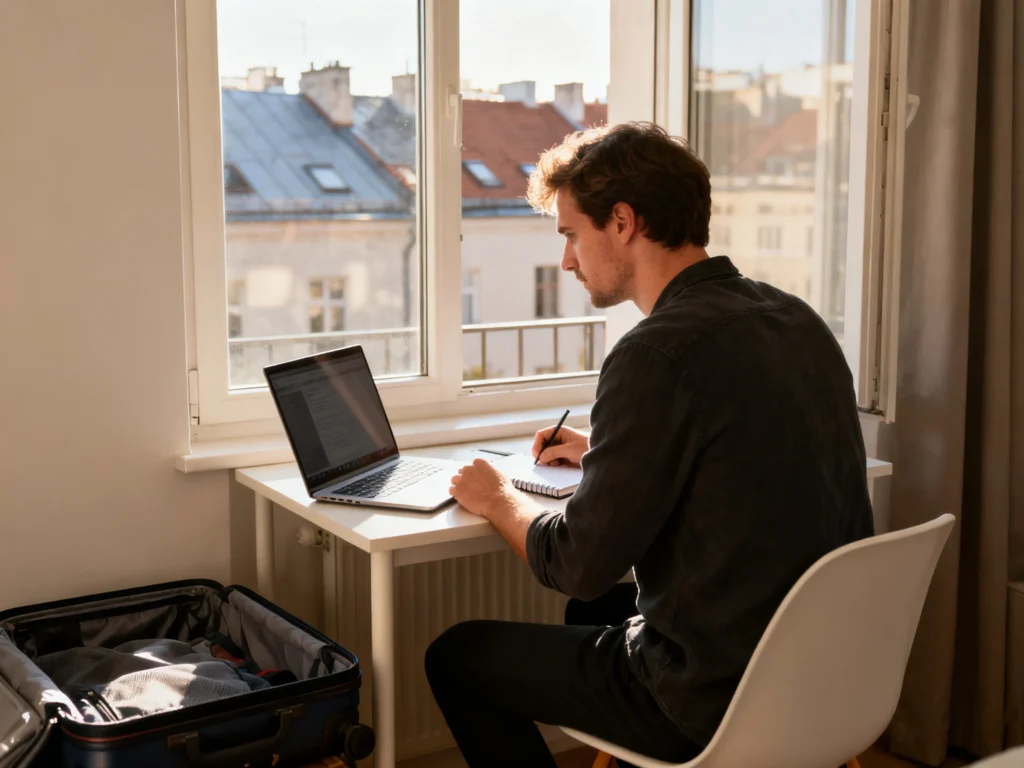
Traveling solo while working remotely is the ultimate “main character energy” combo: you get freedom, focus, and a whole new city as your after-hours playground. It can also get chaotic fast if you don’t set up your days (and your tech) for real life.
These tips are for first-timers who want to stay productive, safe, and actually enjoy the place they’re in—without burning out or spending your entire trip hunting for decent Wi‑Fi.
Top 5
1) Choose a “Remote-Work Friendly” Base (Not Just a Pretty One)

Pick a neighborhood where daily life is easy: walkable streets, grocery stores, laundromats, and multiple cafes nearby so you’re not stuck if one spot is loud or closed. Before booking, scan the map for coworking spaces and public transit lines, then read recent reviews for noise and construction. If you’re staying more than a week, prioritize a place with a real desk (or table) and good natural light to keep you sane.
2) Lock Down Your Internet Plan Before You Arrive
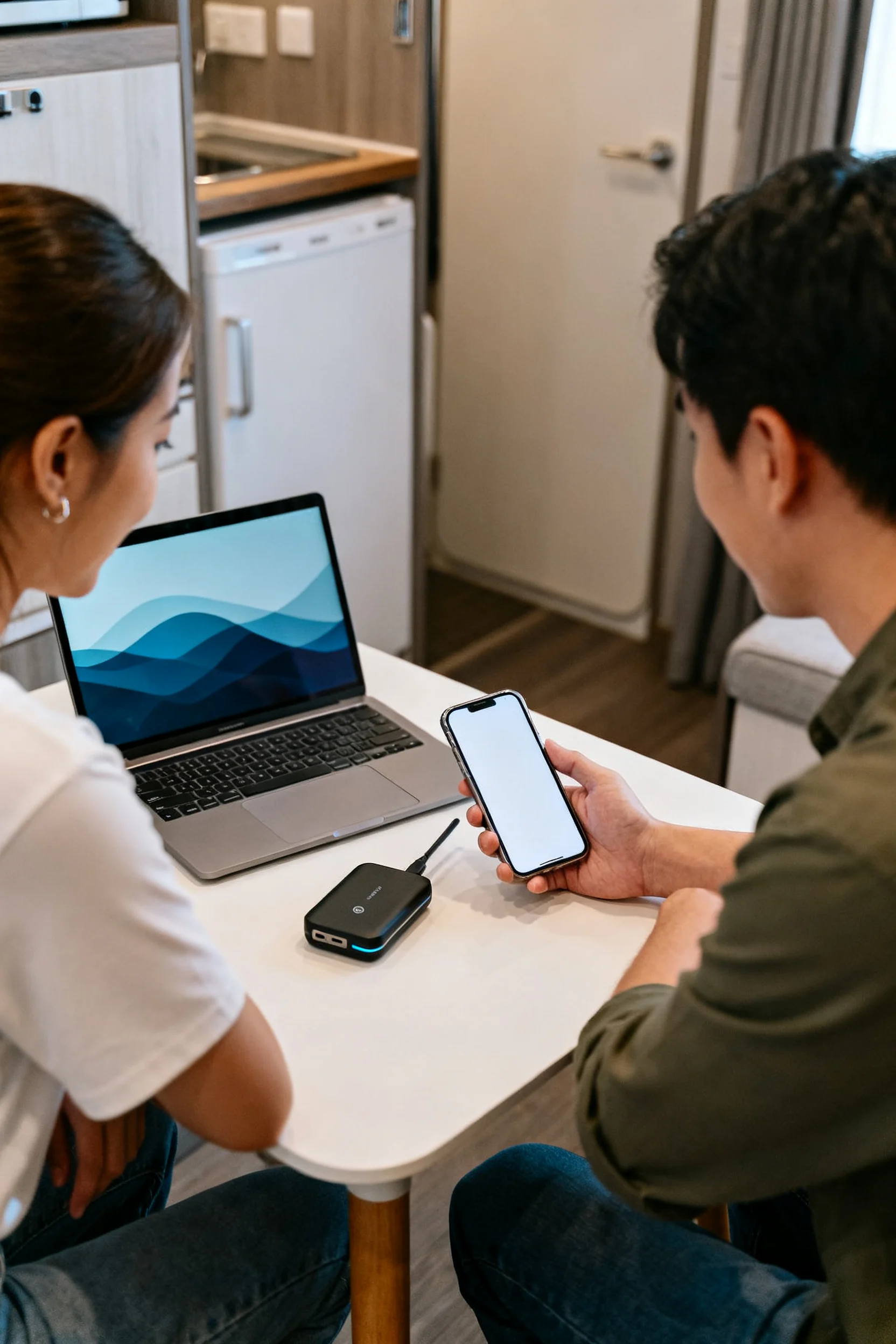
Don’t gamble your paycheck on “Wi‑Fi available” listings—message your host and ask for a recent speed test (download/upload and latency). Have a backup: an eSIM or local SIM with hotspot, plus a small power bank so you can work from anywhere if the power flickers. If your work involves calls, pack wired earbuds and choose accommodations with a door you can close (even a tiny studio beats a party hostel for meetings).
3) Build a Simple Weekly Routine (So You Don’t Waste Your Best Hours)

Time-block your days around energy, not vibes: do deep work in the morning, schedule calls mid-day, and leave late afternoons for exploring. Pick two “anchor” spots you rotate between (one coworking space + one quiet cafe) and save new cafes for lighter work. On arrival day, do a short “setup lap”: find your nearest supermarket, pharmacy, and a reliable coffee place—future you will be grateful.
4) Pack a Mini Work Kit That Makes Any Space Usable
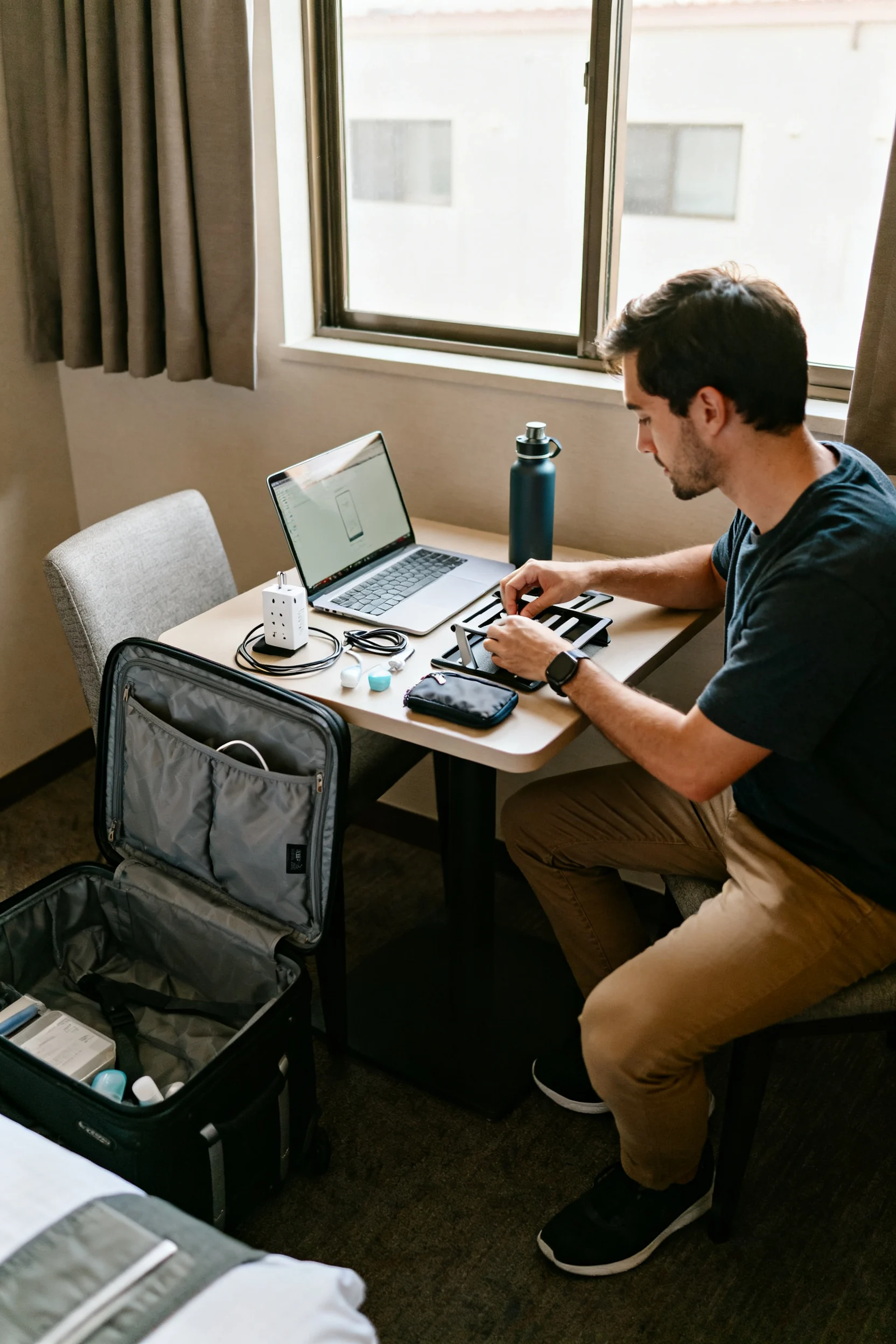
Your goal is portability: bring a universal adapter, a compact extension cord, and a lightweight laptop stand if you’ll be working long hours. Add a reusable water bottle and a small toiletry pouch you can toss into a day bag for coworking days. If you’re hopping between cities, keep everything work-related in one packing cube so airport days don’t turn into “where is my charger” drama.
5) Do Solo-Safe Planning: Low Effort, High Peace of Mind

Save your accommodation address offline, share your general plan with someone you trust, and use a second cloud backup for important documents (passport, insurance, bookings). In a new city, avoid arriving late at night if you can—daytime check-ins are smoother, and you’ll feel more confident learning the area. For social time, join a walking tour, coworking events, or a class (cooking, language, fitness) so you meet people without relying on random nightlife.
FAQ
How do I pick the best city for solo remote work?
Start with your non-negotiables: time zone overlap for meetings, internet reliability, and safety. Then check cost of living, walkability, and whether the city has coworking spaces with day passes. For your first trip, choose a place with strong infrastructure and lots of cafe/coworking options so you have built-in backups.
Is coworking worth it if I’m on a budget?
Usually, yes—especially if you have calls or need guaranteed Wi‑Fi. Try a 1–3 day pass first instead of committing to a full month, and use cafes for lighter tasks. Coworking also helps with structure and meeting people, which can be a big win when you’re traveling solo.
What should I do if my accommodation Wi‑Fi is bad?
Switch to your backup hotspot immediately and move your most important work to a reliable space (coworking or a quiet cafe). Let your host know with specifics (speed test results) and ask if they can reset the router or upgrade service. If it’s truly unusable and you’re staying longer, consider relocating—lost work time gets expensive fast.
How do I balance work and exploring without burning out?
Plan exploring like you plan meetings: pick 2–3 “must-do” activities per week and keep the rest flexible. Schedule one full rest half-day weekly where you do laundry, meal prep, or just chill—travel admin is real. It also helps to do sightseeing close to home base on weekdays and save bigger day trips for weekends.
What are the best ways to meet people when traveling alone?
Choose recurring, low-pressure options: coworking events, walking tours, group classes, and hobby meetups. Stay in a social-but-not-chaotic setup (like a private room in a small hostel or a coliving space) if you want easy conversation without sacrificing sleep. And if you click with someone, suggest a simple plan like a coffee break or a market visit—short and friendly is easiest.