
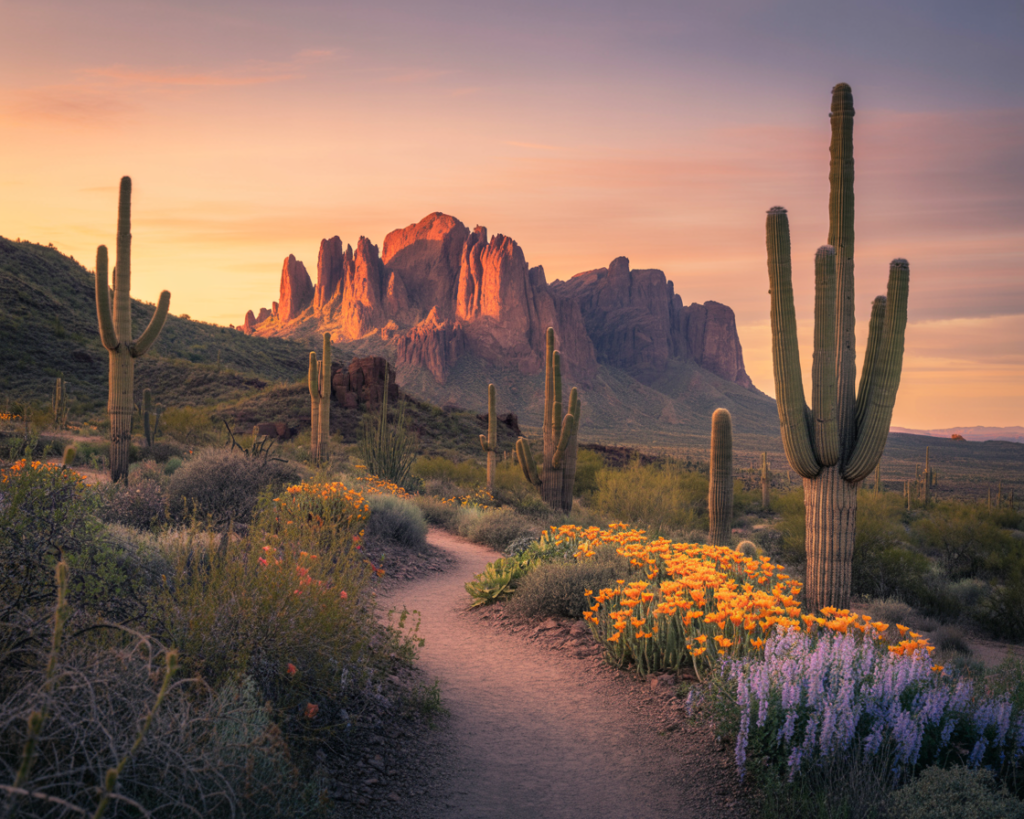
Sunrise paints the Superstition Mountains gold, and Lost Dutchman State Park basically dares you to chase the glow. Trails climb into rugged desert, saguaros throw dramatic shadows, and every corner looks like a screensaver. Want the best hikes, hidden angles, and photo spots without doom-scrolling a dozen blogs?
Let’s map out your perfect day in this Arizona classic.
Why Lost Dutchman Hooks You Fast
You feel the old-west legend vibe the second you step out of the car. The park sits right at the base of the Superstition Mountains, so views hit you before you even hit a trail. The terrain changes quick—rolling desert, volcanic rock, wildflower bursts after rain.
It’s wildly photogenic without trying hard. FYI: You’re dealing with a desert that cooks fast. Start early, carry water like you mean it, and don’t underestimate those steep bits.
The mountain doesn’t care about your brand-new trail runners.
The Best Hikes (from Chill to “Are We There Yet?”)
Treasure Loop Trail (2.4 miles, moderate)
If you want instant reward with minimal suffering, do this first. It wraps the base of the mountain with nonstop views and blooms like crazy in spring. Go counter-clockwise for a gentler climb and better morning light on the cliffs.
Prospector’s View + Jacob’s Crosscut (2–5 miles, create-your-own loop)
This combo threads quieter stretches under the cliffs.
You’ll get long views, scattered cholla gardens, and fewer crowds. Start from the main parking lot, head out on Prospector’s, return via Jacob’s Crosscut for a choose-your-own-adventure vibe.
Flatiron via Siphon Draw (6 miles, very hard)
This one’s the legend. You’ll scramble up Siphon Draw, cross slick rock, then crawl (literally in spots) to the Flatiron’s knife-edge summit.
Views stretch to Phoenix. Bring gloves, 3+ liters of water, real snacks, and your best decision-making. IMO, don’t attempt in summer heat or if your comfort with exposure sits at “meh.”
Native Plant Trail (0.6 mile, easy)
Quick, informative loop for cactus nerds and families. It’s also a sneaky-good spot for macro shots of blooms after rain.
Think prickly pear, cholla, and saguaros flexing for your lens.
Hidden Views You’ll Brag About Later
Treasure Loop’s Ridgeline Nubs
Short side scrambles along the loop lead to boulder perches with front-row Superstition views. You’ll see them—they’re safe if dry, sketchy if wet. Morning light hits the cliffs perfectly from here.
Jacob’s Crosscut Low Angles
Walk farther south and you’ll frame saguaros against the entire northern wall of the Supes.
Bring a longer lens to compress layers. It’s quiet, so you’ll hear cactus wrens and the occasional hiker arguing with their quads.
Siphon Draw’s Slickrock Bowl
Halfway up to Flatiron, the slickrock amphitheater opens a natural stage with city views behind you. If you stop here and skip the sufferfest to the top, you still score serious photos and bragging rights, IMO.
Perfect Photo Spots and When to Shoot
– Cholla Patch near Jacob’s Crosscut: Backlight the spines at sunrise for that halo glow.
Just don’t back into them. They fight back. – Park Entrance Sign + Superstitions: Yes, it’s touristy. Yes, it’s a classic.
Arrive pre-dawn for stars and blue hour. – Saguaro Trios on Treasure Loop: Look for three saguaros lined up; they compose beautifully against the cliff face. – Flatiron Summit: Go at sunrise or late afternoon for softer light and less washed-out terrain. Midday? Hard pass unless you love harsh shadows. Gear tips:
- Wide-angle (16–24mm) for cliff faces and big sky
- Telephoto (70–200mm) to compress saguaros against rock
- Polarizer to tame glare and punch up skies
- Microfiber cloth—dust happens
- Headlamp if you’re chasing sunrise/sunset
Seasonal Sweet Spots
Winter (Dec–Feb): Cool temps, crisp air, great for longer hikes.
Snow dusting on the Supes? Rare, magical, absolutely photogenic. Spring (Mar–Apr): Wildflowers and cactus blooms pop after wet winters. Crowds do too, so hit the trail early.
Bees love flowers; you’ll coexist just fine. Summer (May–Sep): Brutal heat, monsoon storms. Start pre-dawn, pick shorter hikes, and watch the sky. Lightning + ridge lines = nope. Fall (Oct–Nov): Goldilocks season—warm days, clear sunsets, fewer people.
Perfect for Siphon Draw attempts if you’ve trained your legs and ego.
Smart Logistics (So You Don’t Melt or Get a Ticket)
– Park hours: Generally sunrise to 10 p.m., with variations seasonally. Check the official site before you go. – Entry fee: Day-use fee applies. Bring a card or cash. – Parking: Lots fill on weekends by sunrise in spring.
Arrive early and save yourself the stress. – Water: Carry more than you think. The desert will humble you. – Trail etiquette: Uphill hikers get the right of way. Yield to rattlesnakes.
They don’t negotiate. – Dogs: Allowed on leash, but consider paw temps. Rock + sun = hot paws fast. – Services: Visitor center, restrooms at main lots, and bottle fill stations—though don’t rely solely on them.
Trail Pairings for Perfect Days
Sunrise Cruiser
– Hit Treasure Loop at blue hour for golden cliffs. – Detour up a boulder for a solo coffee-with-a-view moment. – Wrap by mid-morning and snag a shady picnic table.
Medium Sweat + Big Views
– Prospector’s View out, Jacob’s Crosscut back. – Extend to Crosscut’s southern segments if your legs feel spicy. – Golden hour photos near the cholla patches.
Flatiron Summit Mission
– Start before sunrise with a headlamp. – Pace the slickrock; use three points of contact on steeper slabs. – Summit snack, photos, and a careful descent before heat spikes.
Safety and Respect, But Make It Simple
– Tell someone your route. Cell service drops in canyons. – Carry a printed or downloaded map.
Trails braid in spots. – Watch for loose rock and crumbly edges; test holds before committing. – Pack the basics: 3L water, electrolytes, salty snacks, sun protection, small first-aid kit. – Leave no trace. The desert takes decades to recover from shortcuts and trampling.
FAQ
Is the Flatiron hike safe for beginners?
Short answer: not really. The route demands scrambling, route finding, and decent fitness.
You can hike to the slickrock bowl for a taste and turn around. Save the summit for when you feel confident with exposure and steep downclimbs.
When does the park get the best light for photography?
Sunrise lights the Superstitions from the front—flat-out gorgeous. Sunset backlights the cliffs, so you’ll shoot silhouettes and sky drama.
Golden hour both ways wins; midday turns everything into a glare fest.
Do I need a permit or reservation?
For day use, no permit beyond the entry fee. For camping, book ahead—sites go fast in winter and spring. Group areas and ramadas may require reservations.
How do I avoid crowds?
Show up early on weekdays, especially outside spring bloom.
Pick Jacob’s Crosscut and the southern segments over the main Treasure Loop. In summer, pre-dawn starts mean you’ll have trails mostly to yourself (plus a close relationship with your alarm clock).
What wildlife should I expect?
You’ll likely see lizards, birds, and maybe javelina. Rattlesnakes show up in warm months—give them space and they’ll return the favor.
Coyotes stay shy, and scorpions hide during the day, but watch where you place hands and gear.
Can I fly a drone?
State parks often restrict drones. Check current park rules before you bring one. Even when allowed, fly responsibly and never near wildlife or crowds.
Wrap-Up: Go Chase the Gold
Lost Dutchman State Park gives you options: quick loops with big payoff, quiet connectors for zen time, and the Flatiron for full-send adventure.
Show up early, carry water, and pick your light. Then just let the Superstitions do their thing while you snag the photos—and the memories—you came for. FYI, once you watch that first sunrise here, you’ll plan your next trip before you hit the parking lot exit.