
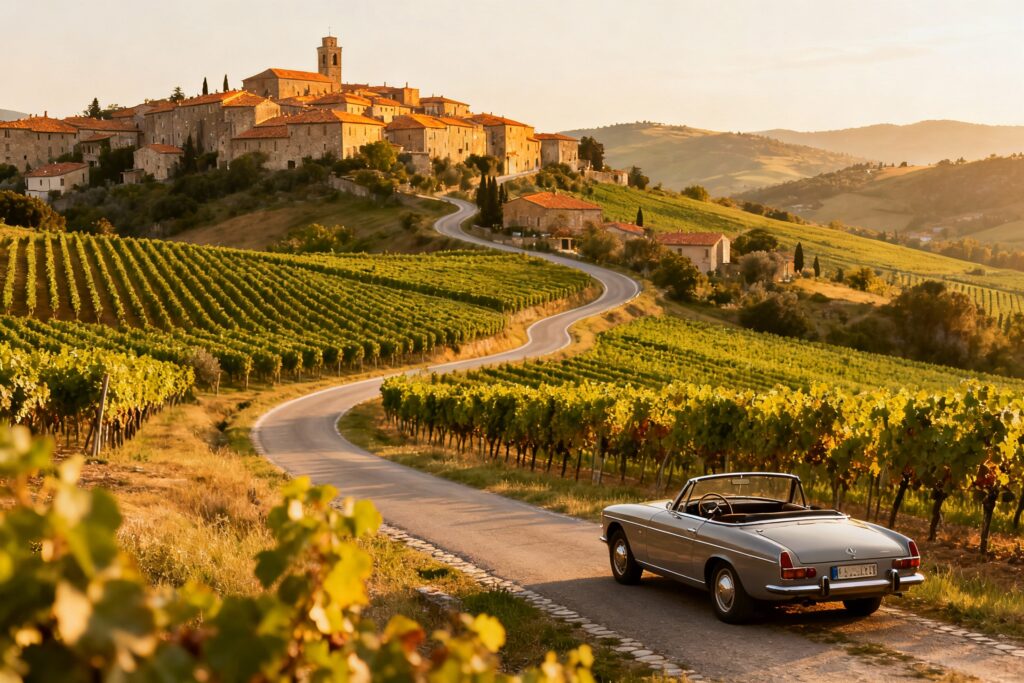
Tuscany doesn’t ask for your attention—it steals it. One minute you’re cruising past cypress-lined lanes, the next you’re plotting how to move into a stone farmhouse forever. Between hill towns that look painted and vineyards that taste like vacation, this place delivers the good stuff.
Ready to plan one perfect week on the road? Let’s make it happen.
Why Tuscany Works So Well for a Road Trip
Tuscany spreads out like a patchwork quilt, and you’ll want wheels to hop between hill towns, vineyards, and those dreamy golden fields. Trains help for big hops, but the magic lies on the scenic backroads.
Think winding climbs, tiny villages, a random roadside shrine, and a view that forces a full stop. Rent a small car—narrow lanes mean you’ll thank yourself later. FYI: manual transmissions cost less, but book an automatic if you don’t want to relive your driving school days. And pack patience for ZTL zones (those dreaded limited-traffic areas) in town centers.
More on that below.
One Perfect Week: A No-Stress Itinerary
You can tweak this, but this flow hits the highlights without turning your vacation into a sprint. Base yourself in two or three places to cut down on packing and unpacking.
- Day 1–2: Florence – Art, aperitivo, and river views. Get your Renaissance fix, then stroll Oltrarno for wine bars.
- Day 3–4: Chianti (Greve, Panzano, Radda) – Rolling vineyards, slow lunches, and golden-hour drives.
- Day 5: Siena & Monteriggioni – Gothic drama and medieval walls.
- Day 6: Val d’Orcia (Pienza, Montalcino, Bagno Vignoni) – The Tuscany of your screensaver.
- Day 7: San Gimignano & Volterra – Towers, alabaster, and gelato victory laps.
Where to Base Yourself
– Florence for 2 nights: Stay near Santa Croce or Oltrarno for charm and nightlife. – Chianti for 2 nights: A farmhouse near Radda or Castellina keeps you central. – Val d’Orcia for 2 nights: Pick Pienza or San Quirico d’Orcia for easy access and views you’ll brag about.
Florence First: Culture Without Overwhelm
You could spend a week in Florence, but we’ll keep it tight and fun.
See the Duomo, walk the dome if your calves agree, then bounce to the Uffizi or Accademia for the essentials. Book timed tickets unless waiting in lines is your kink. In the evening, wander the Oltrarno side for artisan workshops and wine bars.
Grab a spritz at sunset on Piazzale Michelangelo—yes, it’s touristy, and yes, the view is worth it. IMO, Florence shines at night when the day-trippers vanish.
Florence Pro Tips
– Skip driving in Florence. Park outside the center or pick up the car on your way out. – Eat smart: Try lampredotto for bragging rights; hit Sant’Ambrogio market for lunch. – See a church, not a million: Santa Croce packs a punch with fewer crowds than the Duomo complex.
Chianti: Wine Roads and Lazy Lunches
Chianti isn’t one place—it’s a countryside mood.
Drive the SR222 (Chiantigiana) between Greve and Castellina for classic vineyard views. Stop whenever a sign says “degustazione”—that’s your cue for a tasting and a light buzz. Book one proper winery tour and keep the rest spontaneous.
Many small producers welcome walk-ins, and you’ll learn more from a 15-minute chat than a glossy brochure.
A Few Worthwhile Stops
– Greve: Main square, butcher’s shop with cured meats that will ruin supermarket prosciutto forever. – Panzano: Go for steak at Dario Cecchini’s temple of beef. You’ll talk about it for years. – Radda: Quiet lanes, gorgeous viewpoints, plus cozy enotecas. Driving note: Chianti roads twist like pasta. Go slow.
Enjoy it. You’re literally in a wine commercial.
Siena and a Medieval Mic Drop
Siena feels like a living history book with better coffee. Stand in the scallop-shaped Piazza del Campo and imagine the Palio horse race thundering past.
Duck into the Duomo—striped marble, insane floors, even people who “don’t like churches” go wow. On your way out, pull into Monteriggioni, a tiny walled town that looks like a movie set. Walk the ramparts, grab gelato, pretend you’re in armor.
It’s a quick stop and pure fun.
Val d’Orcia: Postcards Made Real
This area south of Siena hits every Tuscan fantasy: winding roads, lone cypresses, sun-bleached farmhouses. You’ll pull over so often you might not reach lunch. That’s okay—pack snacks. Pienza charms with perfect streets and pecorino shops. Montalcino pours Brunello with swagger. Bagno Vignoni brings thermal waters and a piazza that’s actually a pool.
If you’re tired of cities, you’ll breathe here.
Scenic Spots to Pin
– Capella della Madonna di Vitaleta: That tiny chapel between the fields. – Gladiator Road near Pienza: The cypress alley from, yes, Gladiator. – Podere Belvedere: Sunrise photographers’ hive—go early or embrace the tripod crowd.
San Gimignano and Volterra: Towers and Stone
San Gimignano keeps its medieval skyscrapers like it knew Instagram was coming. Climb the Torre Grossa for 360-degree views that slap. Grab world-champion gelato at Gelateria Dondoli, then wander lanes lined with ceramics and leather.
Volterra sits close by with Etruscan roots and alabaster workshops. It feels less crowded, more lived-in. The Roman theater ruins are a legit surprise, and the evening light turns the stone honey-gold.
You’ll get it when you see it.
Practical Stuff You’ll Actually Use
Because nothing ruins a vibe like a parking ticket or a lunch that disappoints.
Driving and ZTL Zones
– ZTL = do not enter in historic centers unless your hotel registers your plate. Fines arrive months later like unwelcome souvenirs. – Parking: Look for blue lines (paid), white (free), yellow (nope). Use municipal lots outside old towns. – Navigation: Google Maps works, but it can route you into ZTLs.
Double-check signs.
Food Rules That Aren’t Rules
– Lunch runs 12:30–2:30, dinner 7:30–10. Arrive late, go hungry. – Order like a local: One or two courses, not the whole menu. Pace yourself. – Regional musts: Pici with cacio e pepe (Val d’Orcia), ribollita (Florence), bistecca alla fiorentina (Chianti/Siena), cantucci with Vin Santo (anywhere, always).
When to Go
– April–June: Lush green, wildflowers, comfortable temps. – September–October: Harvest vibes, golden light, ideal IMO. – July–August: Hot, crowded, pricier—still beautiful, but plan early mornings.
Sample Daily Flow (So You Don’t Overthink It)
– Morning: One big sight + espresso break. – Midday: Long lunch, maybe a tasting.
No rush. – Afternoon: Scenic drive, small town stroll, gelato stop. – Evening: Golden hour photos, simple trattoria dinner, local wine. Sleep like a stone. This rhythm keeps energy up and FOMO down.
Tuscany isn’t a checklist—treat it like a playlist.
FAQ
Do I need a car for this itinerary?
Short answer: yes. You can connect big dots by train and bus, but the best views and villages sit off the main routes. A small rental opens up early-morning photo ops and those pull-over-right-now moments.
FYI, automatics sell out—book early.
How do I avoid ZTL fines?
Park in signed lots outside centers and walk in. If your hotel sits inside a ZTL, ask them to register your plate before arrival. Watch for round signs with a red circle—those mark limited-traffic zones.
When in doubt, don’t enter.
What wines should I try beyond Chianti Classico?
Go for Brunello di Montalcino (structured, age-worthy), Vino Nobile di Montepulciano (elegant), and Super Tuscans (Sangiovese with international grapes—delicious rule-breakers). For whites, try Vernaccia di San Gimignano—crisp and food-friendly.
Is tipping expected in restaurants?
Service is usually included. Leave a few coins or round up if you loved it.
For nicer meals, 5–10% feels generous but not required. No one expects American-style tipping, and you won’t offend with modest gratitude.
How many towns can I see in a day?
Two, comfortably. Three if they’re close and you keep stops short.
But the point isn’t speed—it’s savoring. IMO, one town + one countryside drive beats four rushed photo ops every time.
What should I book ahead?
Reserve Uffizi/Accademia tickets, one or two winery tours, and popular restaurants in Florence or Siena. For countryside trattorias, call the day before or show up early.
Hotels and farm stays fill fast in May/June and September.
Wrap-Up: Make Space for Serendipity
Plan the bones, leave room for whimsy. Tuscany rewards detours, unexpected tastings, and that quiet bench with an outrageous view. Drive slow, eat well, and let the hills do their thing.
By the end of the week, you’ll already be plotting your return—because of course you will.