
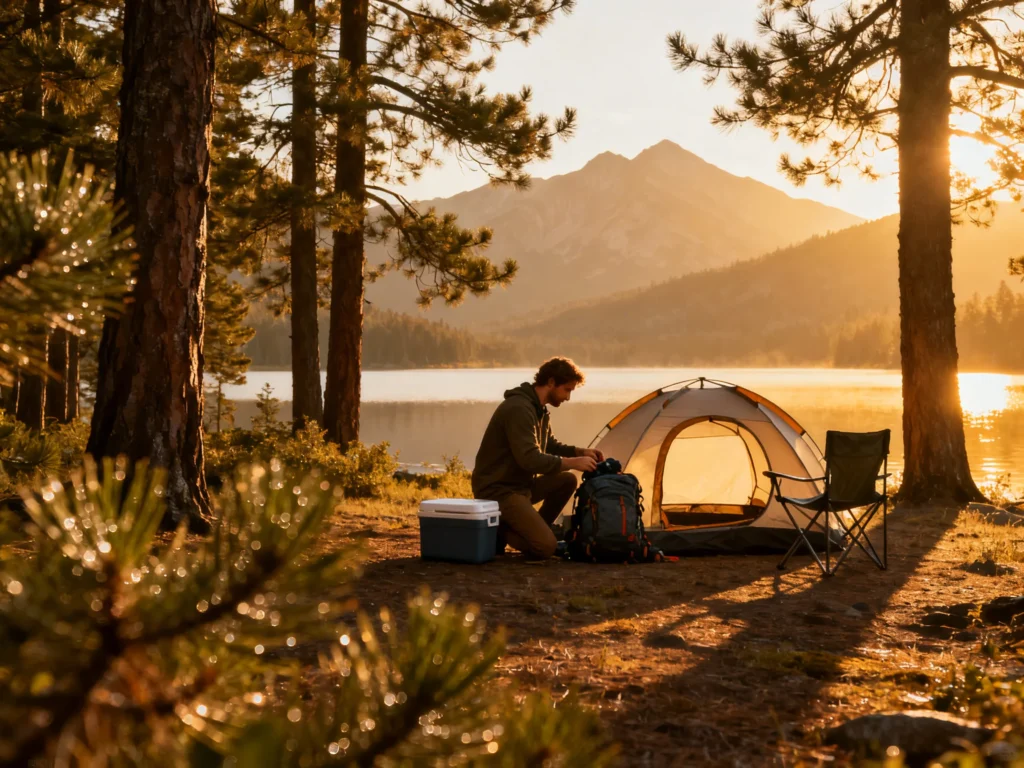
Camping is one of the fastest ways to feel like you actually went somewhere—not just “stayed somewhere.” But the difference between magical and mildly chaotic usually comes down to a few smart systems, not fancy gear.
These camping hacks are all about smoother travel: less packing drama, faster setup, better sleep, and meals that don’t turn into a whole production. Perfect if you’re new to camping or just tired of learning the hard way.
Top 10
1) Pack by “camp moments,” not by categories
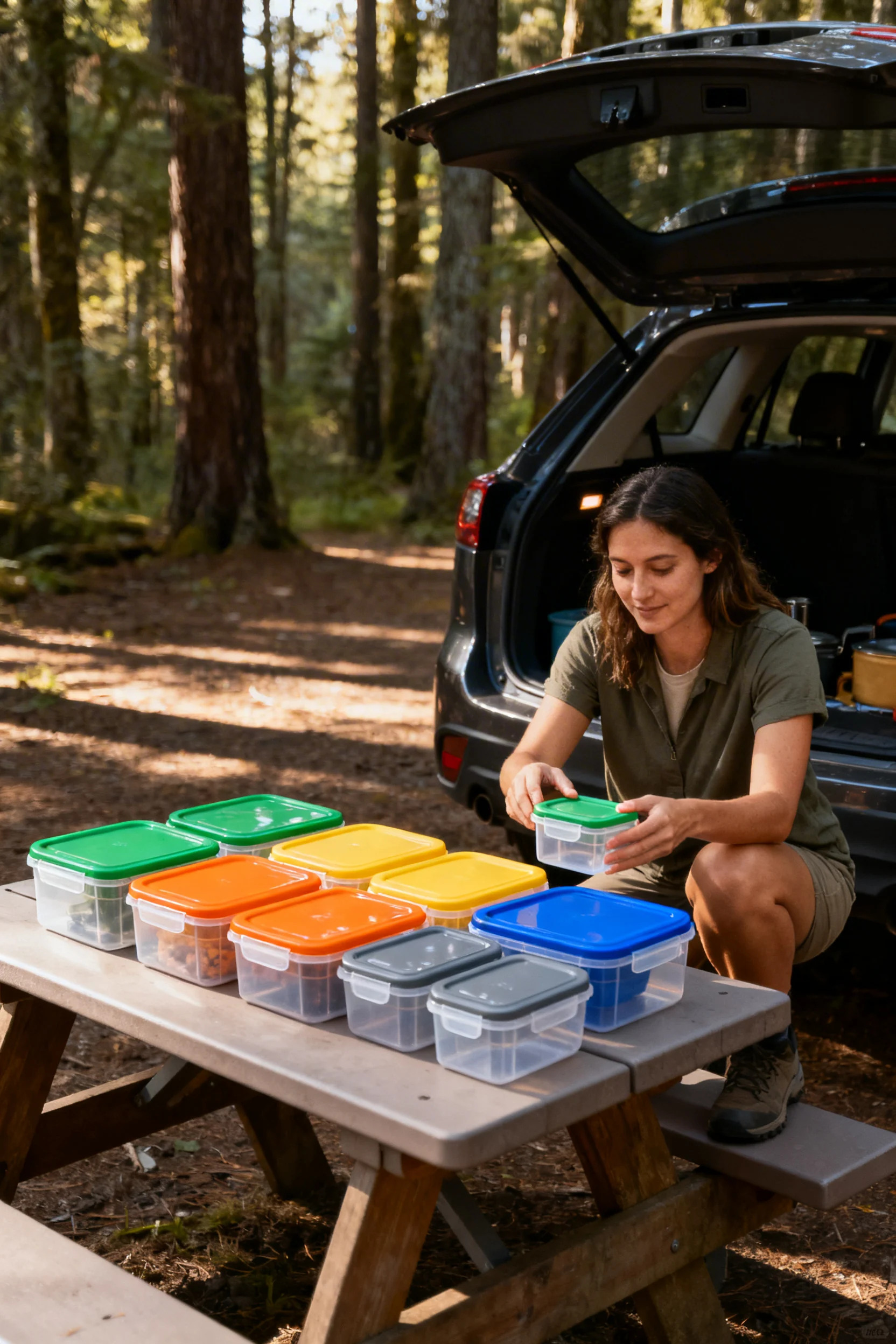
Instead of packing “kitchen stuff” or “clothes,” pack in small bins labeled by moments: Arrival Setup, Cooking, Morning, Night, Rain. It makes setting up faster because you’re not digging for one headlamp inside a random bag. If you’re road-tripping between campsites, this also keeps daily essentials reachable without unpacking everything.
2) Freeze your first-night dinner (it’s a cooler hack too)
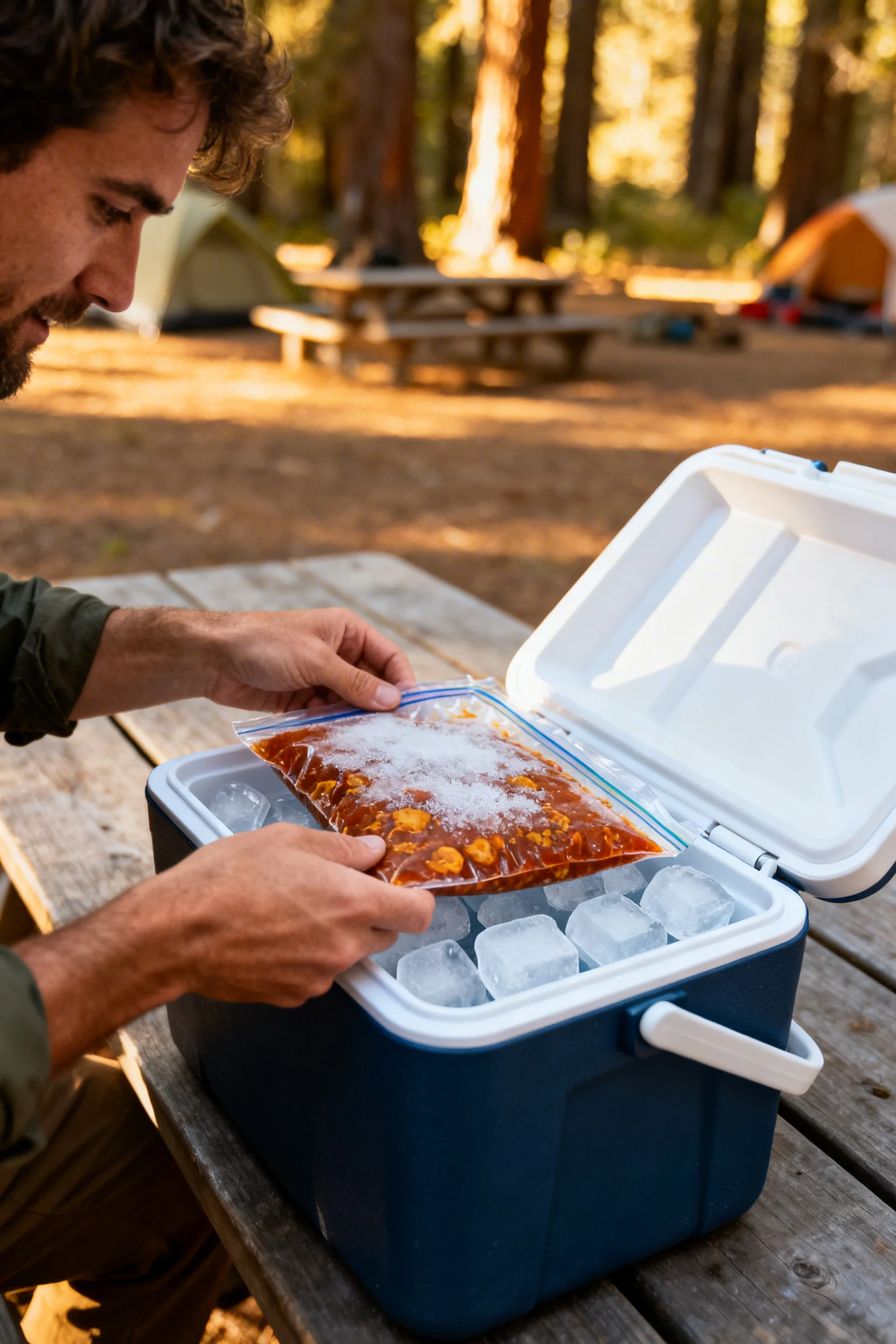
Cook something like chili, curry, or pasta sauce at home, freeze it flat in a zip bag, then pack it on top of your cooler. It acts like an ice pack while it thaws, and you’ll have a real meal ready with minimal effort after a long drive. Pair it with instant rice, tortillas, or pre-cooked pasta for the easiest campsite dinner.
3) Set up a “no-shoes zone” with a ground tarp + small brush
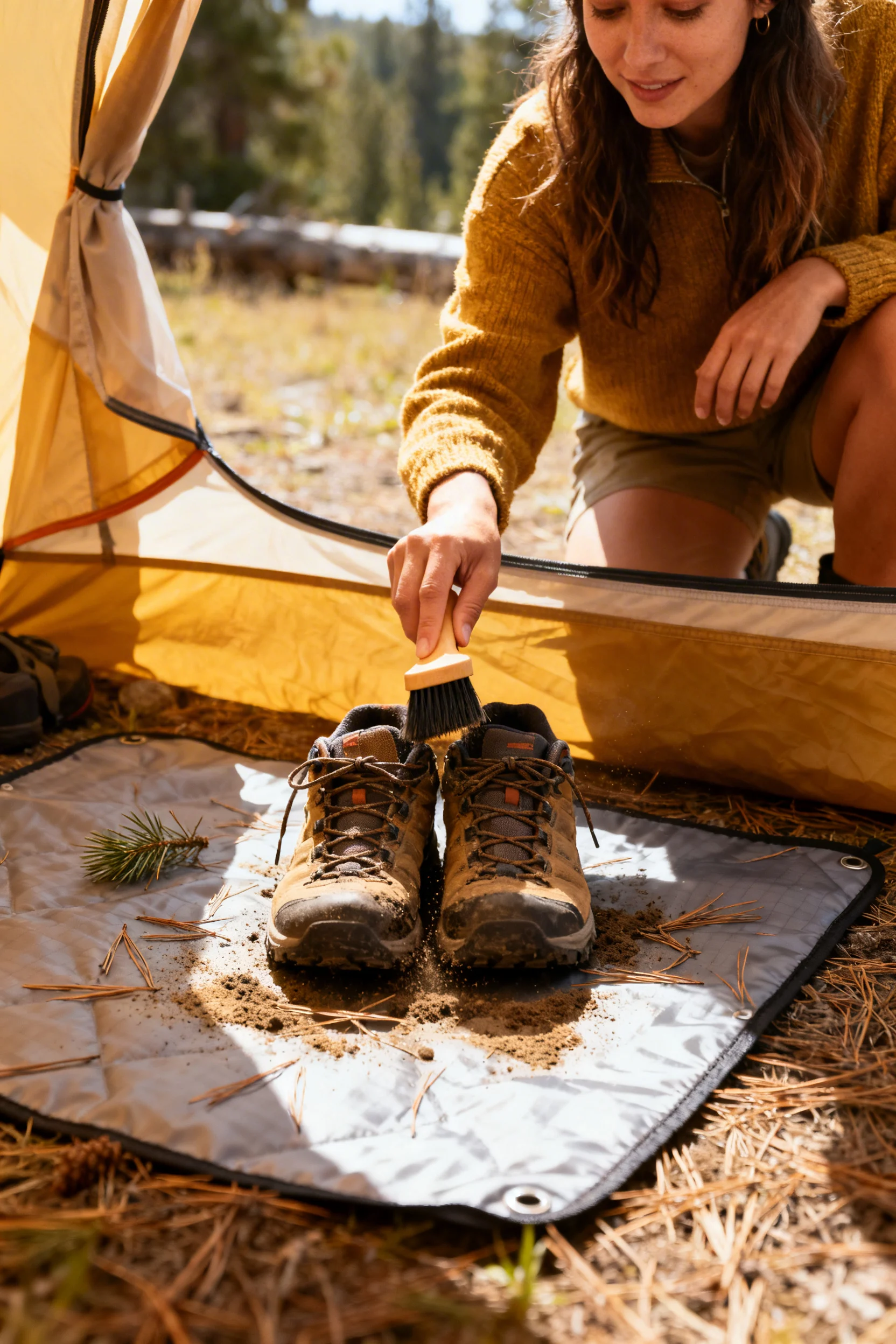
Bring a small tarp or outdoor mat and place it right outside your tent door—this is your clean zone. Add a cheap little brush (even a hand broom) to knock off dirt before you go in. You’ll sleep better, your gear stays cleaner, and you won’t spend your trip shaking sand out of everything you own.
4) Use the “two-light rule” so you’re never stuck in the dark
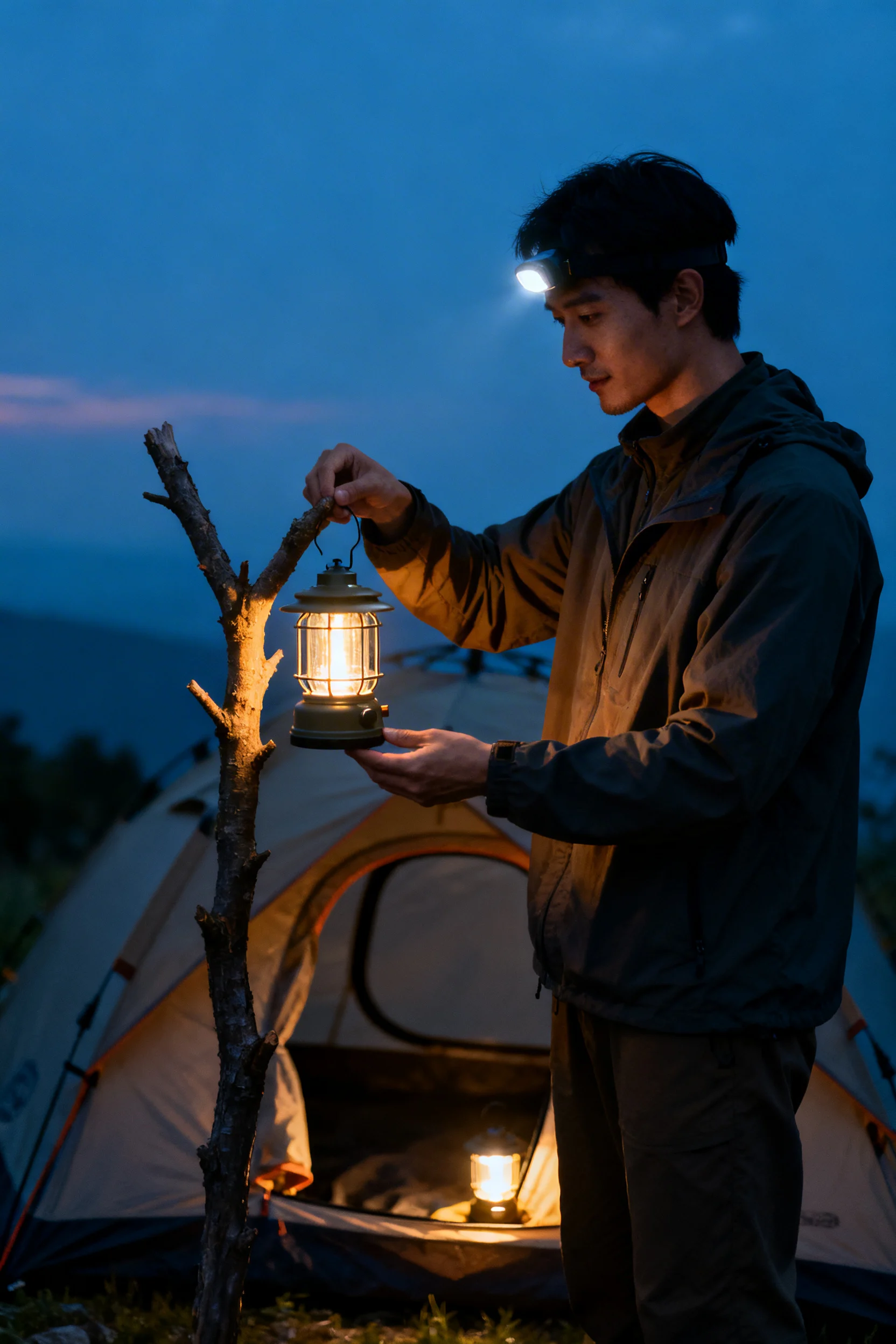
Pack two reliable light sources per person: a headlamp for hands-free tasks and a lantern or area light for camp vibes. Keep one headlamp in the tent and one in the car/daypack so you’re covered if you arrive late. Bonus: stash spare batteries (or a small power bank) in the same pouch so you’re not hunting for them at 10 PM.
5) Pre-rig your tent: stakes, guylines, and a labeled bag
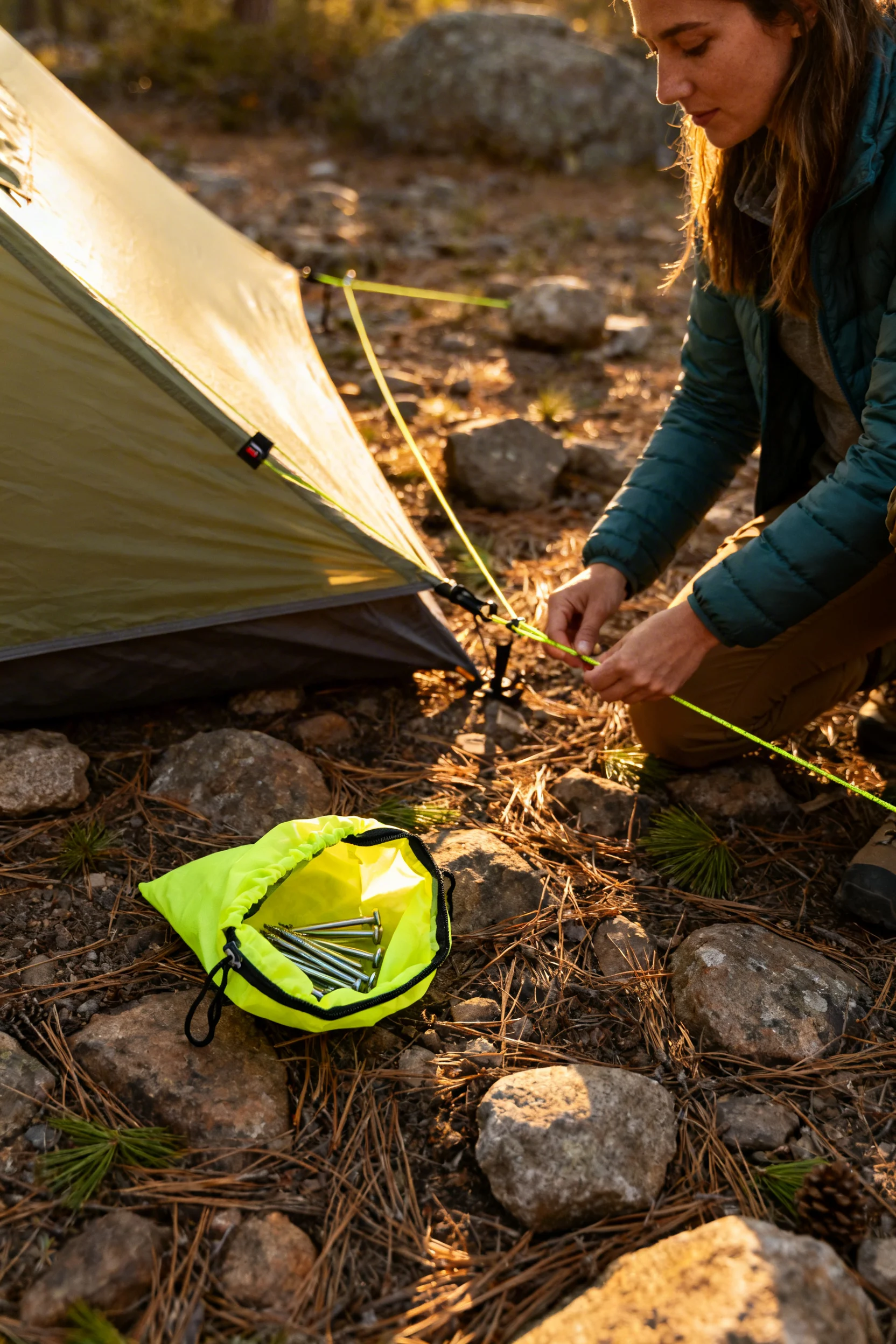
Before your trip, attach guylines to the rainfly and tent (if they aren’t already), and pack stakes in a bright, labeled bag. On arrival, you can set up in minutes instead of untangling cords in the wind. If you’re camping in popular parks, getting set up quickly matters—especially when you roll in near sunset.
6) Keep a “camp shower kit” even if you won’t shower
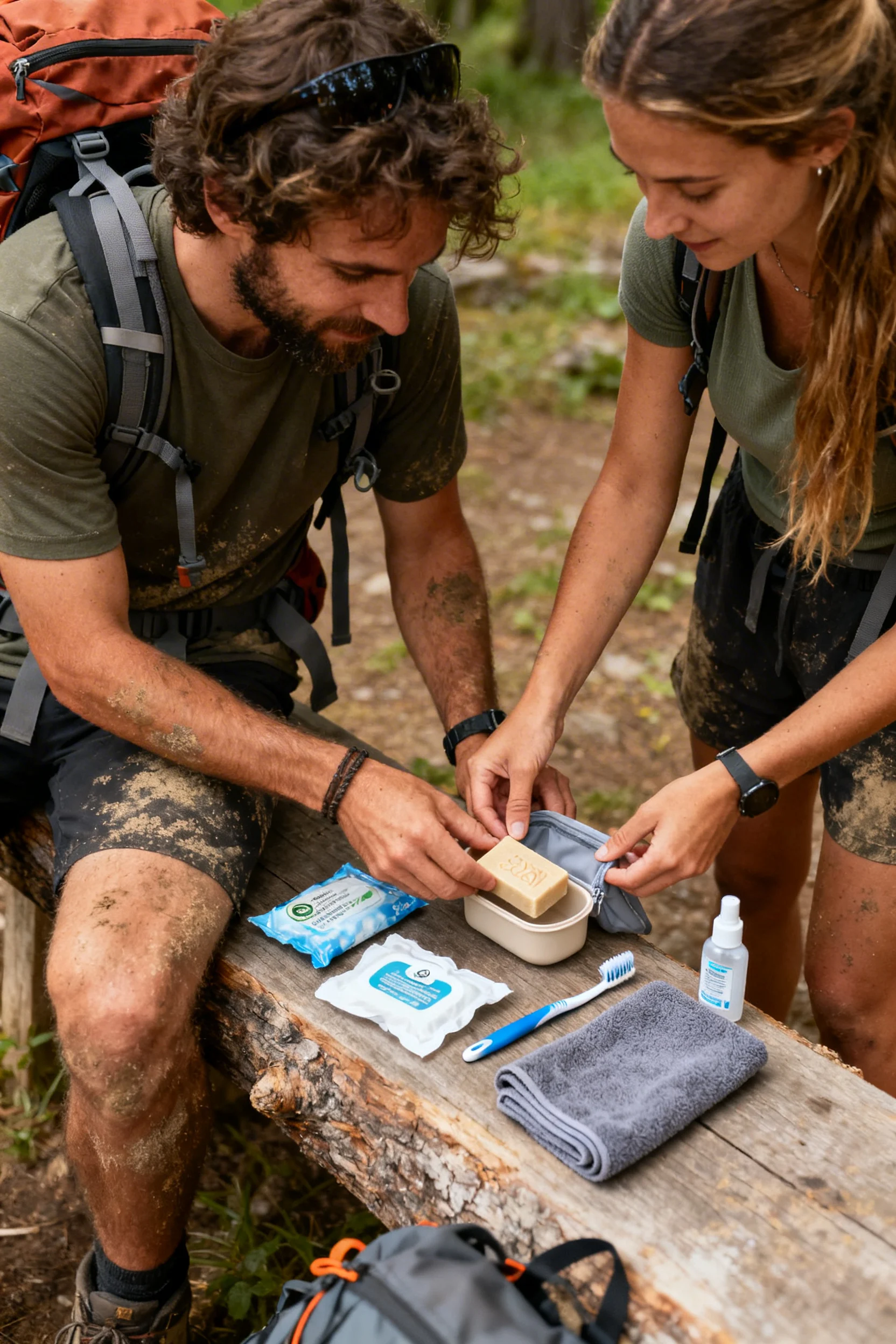
Make a small kit with wipes, biodegradable soap, a quick-dry towel, toothbrush, and a tiny hand sanitizer. It’s not about being fancy—it’s about feeling human after hiking, sunscreen, and campfire smoke. Keep it in an easy-grab tote so you can walk straight to the restroom building without repacking your whole bag.
7) Bring one collapsible bin for “everything that’s not assigned”
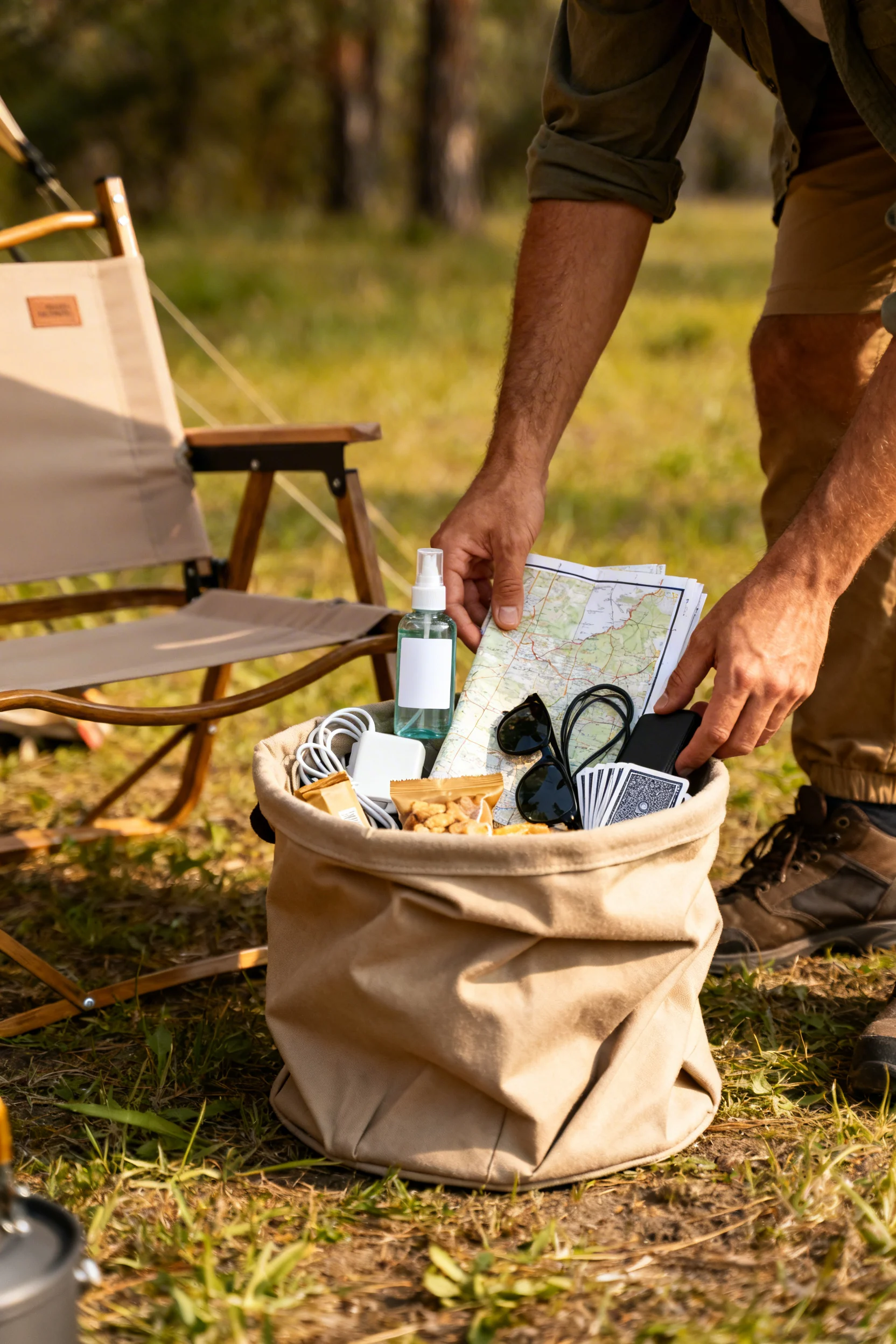
Random items multiply at camp: bug spray, maps, sunglasses, cords, snacks, cards, and that one spoon that never makes it back to the kitchen bin. A collapsible bin becomes your landing zone so your campsite doesn’t turn into a scavenger hunt. At checkout, you can sweep the whole site into the bin, then sort later at home.
8) Plan your campsite like a tiny neighborhood
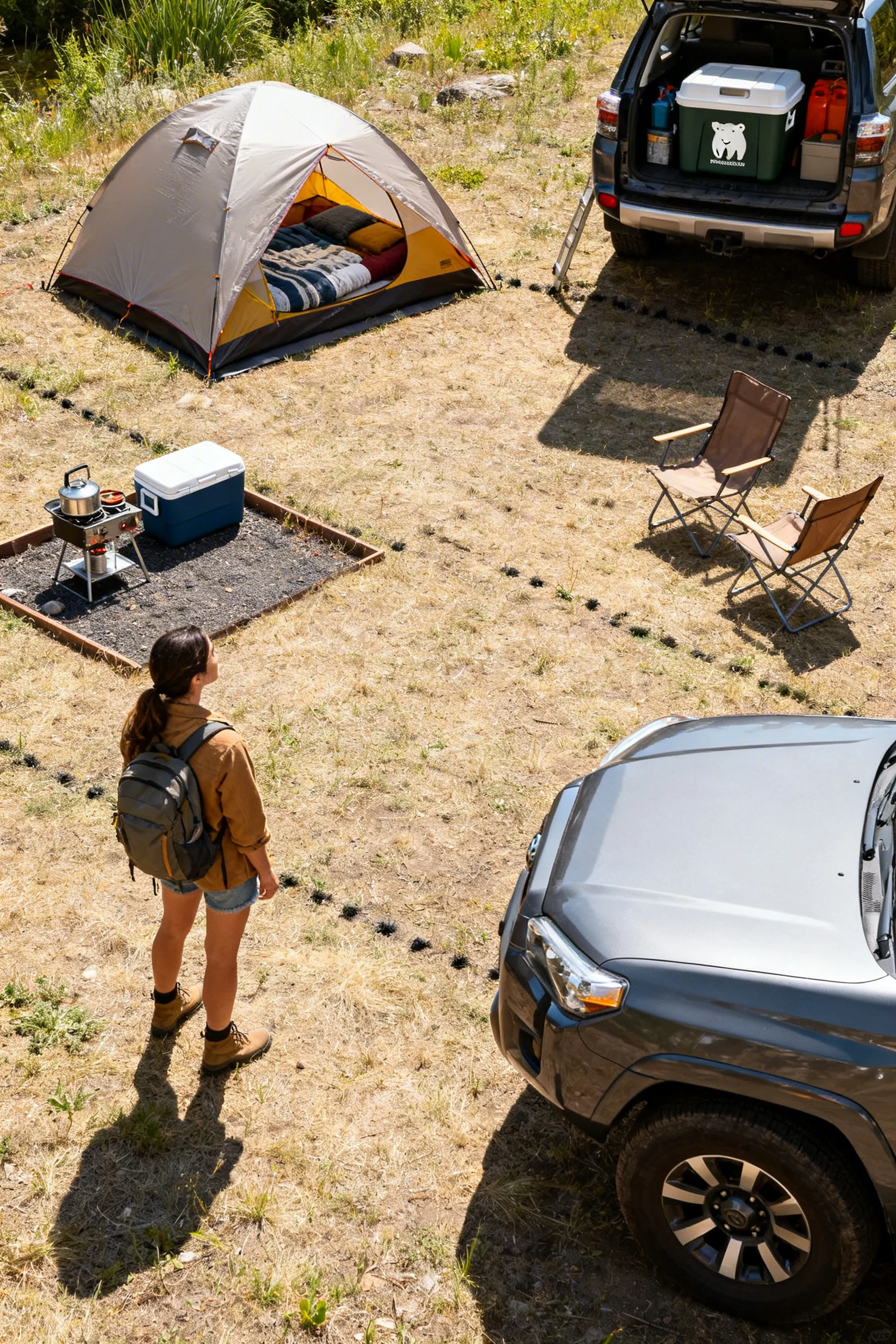
Set zones: sleeping (tent), cooking (stove + cooler), lounging (chairs), and storage (food + trash). Put the kitchen downwind from your tent if possible, and keep food storage close to your car or bear box for quick lock-up. This simple layout saves steps, reduces mess, and makes your campsite feel calm—even on busy weekends.
9) Upgrade sleep with one decision: insulation first
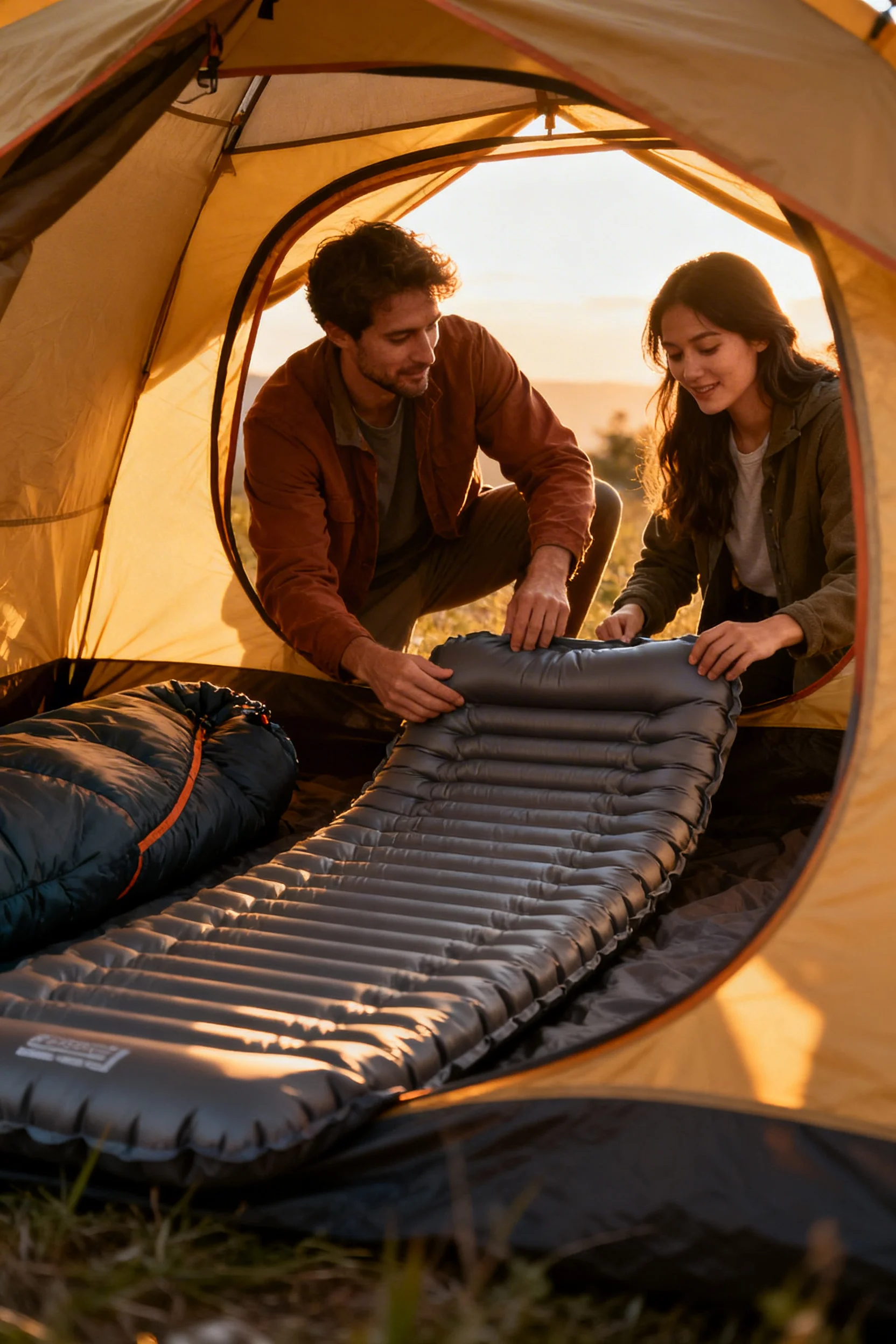
If you only improve one thing, make it what’s under you: a quality sleeping pad or insulated air pad changes everything. Even warm destinations can get cold at night, and ground chill is the main sleep killer for first-timers. Check the overnight low before you go, then pack layers (hat + socks included) like you’re dressing for a late-night beach breeze.
10) Make checkout painless with a 10-minute “closeout routine”
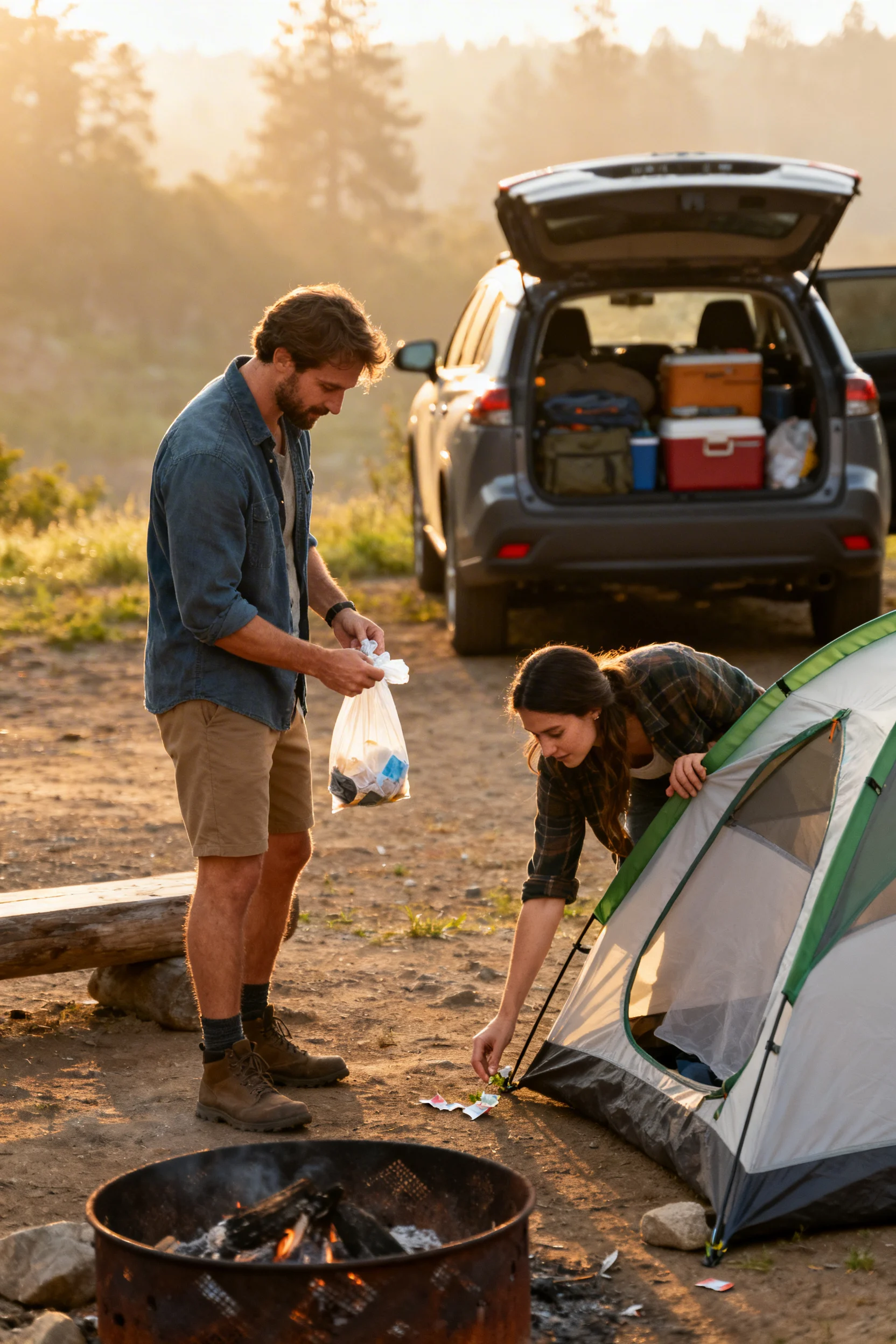
Set a timer and do the same checklist every time: trash, food, fire, tent corners, and one final sweep for micro-trash. Pack the car in reverse order (stuff you won’t need goes in first), and keep a small “last bag” for phone chargers, keys, and restroom kit. This keeps you from leaving stakes behind—or realizing you packed your toothbrush in the deepest bin.
FAQ
What’s the best way to choose a campsite for a first camping trip?
Start with established campgrounds that have bathrooms, water, and marked sites—state parks and national park frontcountry campgrounds are ideal. Look for a site with some shade, relatively level ground, and enough space for your tent and car. If you’re booking online, scan recent reviews for noise, flooding issues, and how close sites are to each other.
How far in advance should I book campsites?
For popular destinations and summer weekends, book 2–6 months ahead if you can—national parks can be even earlier depending on the system. For shoulder season or midweek trips, you can often find availability 1–4 weeks out. If you’re flexible, search by “first available” and consider smaller nearby campgrounds as backups.
What should I eat on a camping trip if I don’t want to cook much?
Go for minimal-cook meals: frozen first-night dinner, wraps, bagged salads, instant oatmeal, fruit, and pre-cooked proteins. Pack snacks you’ll actually eat while driving and setting up (nuts, jerky, granola bars). If your campground is near a town, plan one easy takeout stop so every meal isn’t on you.
How do I store food safely at camp?
Use the campground’s bear box if provided; otherwise store all food, trash, and scented items (toothpaste, deodorant) in your car or an approved bear canister where required. Don’t keep snacks in your tent, even if it feels convenient. Before bed and when you leave camp, do a quick “scent check” so nothing is accidentally left out.
What’s the biggest mistake first-time campers make?
Overpacking random gear while underpacking the basics: lighting, insulation, and a simple system for staying organized. Another common issue is arriving too late—aim to get to camp with at least 1–2 hours of daylight for setup. The win is planning for comfort first, because better sleep and easy meals make everything else feel fun.